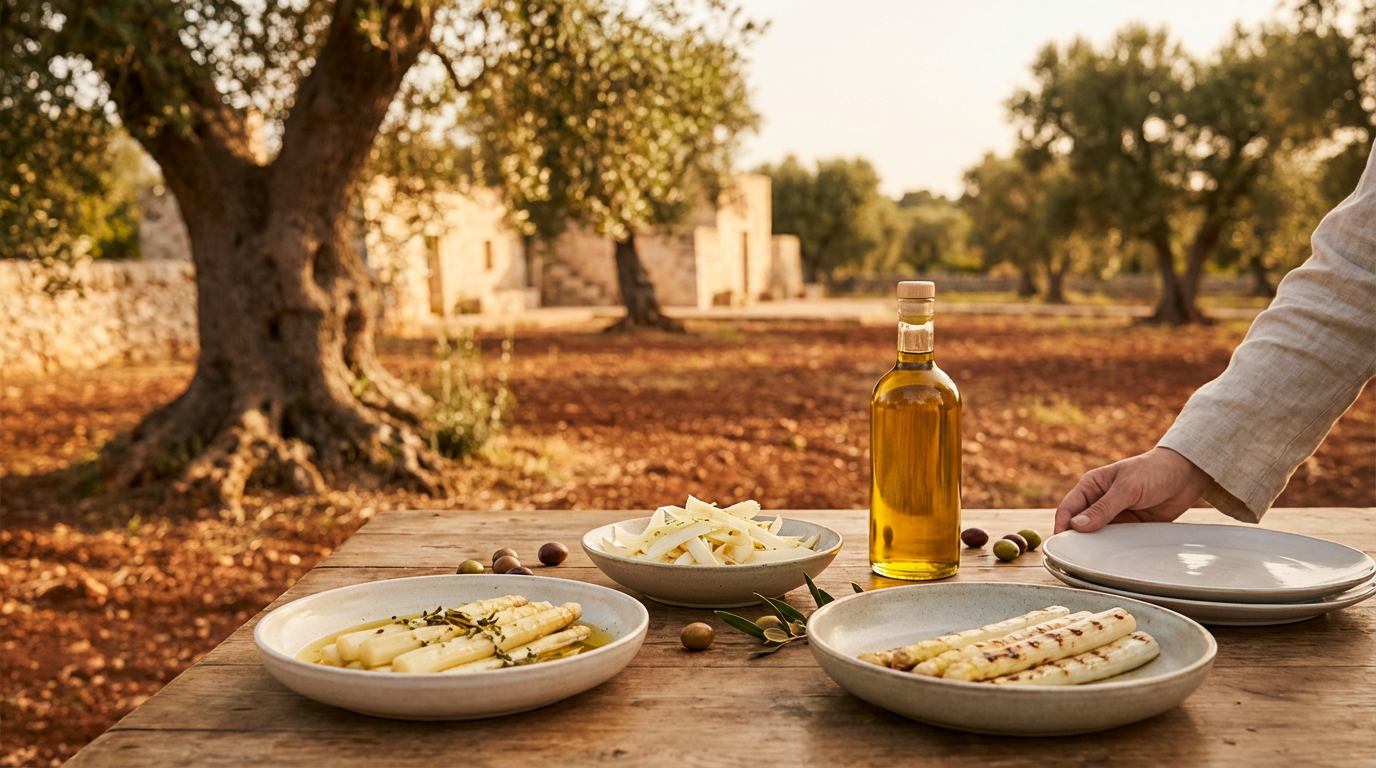
White asparagus and olive oil are a far better combination than tradition would have us believe. A fruity, peppery Koroneiki olive oil complements the nutty sweetness of the asparagus in a way a heavy sauce never could, by enhancing the vegetable's own flavor rather than masking it. This pairing is the essence of light, honest spring cuisine.
TL;DR:
- The better choice: Fruity olive oil is a light, aromatic alternative to heavy butter or hollandaise sauce with white asparagus.
- Perfect pair: A characterful, peppery Koroneiki olive oil from Crete harmonizes perfectly with the nutty, slightly bitter notes of fresh asparagus.
- Versatile recipes: Whether pan-fried, in a salad, or in a soup—olive oil elevates asparagus in every form and adds a Mediterranean touch.
- Quality is everything: Use only a high-quality extra virgin olive oil with low acidity (< 0.3%), as it functions as a condiment, not just a fat.
At a glance:
- Seasonal harmony: Asparagus season (April-June) overlaps perfectly with the availability of freshly pressed olive oil from the latest harvest.
- Recommended variety: Koroneiki olive oil from the Messara plain, Crete.
- Quality hallmark: Acidity below 0.3% and cold extraction at ≤ 27°C.
- Flavor profile: Grassy green, peppery finish, with notes of artichoke and green tomato.
- Healthier alternative: Replaces saturated fats (butter) with valuable unsaturated fatty acids and polyphenols.
- Ground rule: The oil must be able to stand up to the strong asparagus flavor; mild oils will be lost.
White Asparagus with Olive Oil: Why This Combination Works
For German gourmands, April ushers in an almost sacred time: asparagus season. Traditionally, the 'white gold' is tossed in butter or buried under an opulent blanket of hollandaise sauce. We think asparagus deserves better. It's like giving a soloist an entire orchestra that drowns them out. A truly good product needs a partner that brings out its best qualities, not hides them. This is where an honest, artisan olive oil comes into play.
The combination of white asparagus and a first-class olive oil is a sensory revelation. The delicate, nutty, and sometimes slightly sweet flavors of the cooked asparagus find a perfect counterpart in the fruity, grassy, and often peppery character of an early harvest oil. It's a dialogue of flavors. The polyphenols in the oil, responsible for that peppery tickle in the throat, awaken the bitter notes of the asparagus and elevate them to a new level. This is no longer a side dish; it's a duet. At Olivora, we swear by the oil from our partners, the Drakakis family from the Messara plain in Crete. The oil extracted there from the Koroneiki olive has just the right intensity to stand alongside the asparagus without dominating it.
Switching from butter to olive oil is more than just modernizing a classic; it's a return to focusing on the product itself. Instead of coating the asparagus with heavy, milky fat, olive oil envelops it with a silky texture and adds its own complex layer of flavor. Yes, good olive oil can and should have character, including a certain bitterness. If you want to change that, you might as well buy sunflower oil. For everyone else, this is the beginning of a culinary friendship.
Choosing the Right Olive Oil for Asparagus: A Matter of Character
Not every olive oil is suited for a date with the king of vegetables. A pale, industrially filtered, and flavor-neutral oil from the supermarket shelf will be utterly lost. It provides fat, but no personality. For asparagus, you need an oil with backbone, an extra virgin olive oil that proudly presents its origin and variety. Look for oils classified as "medium-fruity" or "intense-fruity."
The crucial quality markers can be identified by a few key points. An extra virgin olive oil must meet clearly defined standards, including cold extraction at temperatures below 27°C. This gentle process ensures that the volatile, fragile aromas and valuable polyphenols are transferred from the olive into the oil. Another hard-and-fast criterion is the acidity level. While the limit for "extra virgin" is 0.8%, at Olivora we set an upper limit of 0.3%. A low acidity level is an indicator of healthy, freshly processed olives and meticulous work. You can think of polyphenols as the tannins of the olive—they give the oil structure, a peppery note, and are also responsible for many of the health benefits of olive oil.
For the most discerning palate seeking the most intense and pure form of Cretan gold, there is an exclusive option. By becoming a member of the Harvest Club, you become part of a private grove and gain access to limited special bottlings, reserved for you right after the harvest. This oil, often from the very first week of the harvest, is particularly robust and complex in flavor—the ideal companion for a characterful dish like asparagus.
Recipe 1: Pan-Fried White Asparagus with Lemon, Feta, and Mint
This recipe is the simplest and perhaps most honest way to celebrate the combination of asparagus and olive oil. Pan-frying caramelizes the natural sugars in the asparagus, creating delicious roasted flavors that contrast beautifully with the freshness of lemon and mint. The feta adds a welcome salty creaminess.
Step-by-Step Preparation
Start with 1 kg of fresh, white asparagus. Peeling is not optional here; the skin is tough. Place the peeler about a centimeter below the tip and pull it down in long strokes. The woody ends (about 2-3 cm) should be generously trimmed. Heat a large skillet (cast iron is ideal) over medium-high heat and add 4-5 tablespoons of our Cretan olive oil. The aroma that now arises as the cold-extracted oil warms up is an experience in itself: notes of freshly cut grass and a hint of pepper fill the kitchen.
Place the asparagus spears in the hot pan, ideally in a single layer. Pan-fry, turning occasionally, for about 10–15 minutes. The spears should be tender but still have a bite, with golden-brown roasted spots in places. In the last two minutes, reduce the heat, add the zest of half an organic lemon and a generous pinch of sea salt. Toss everything well.
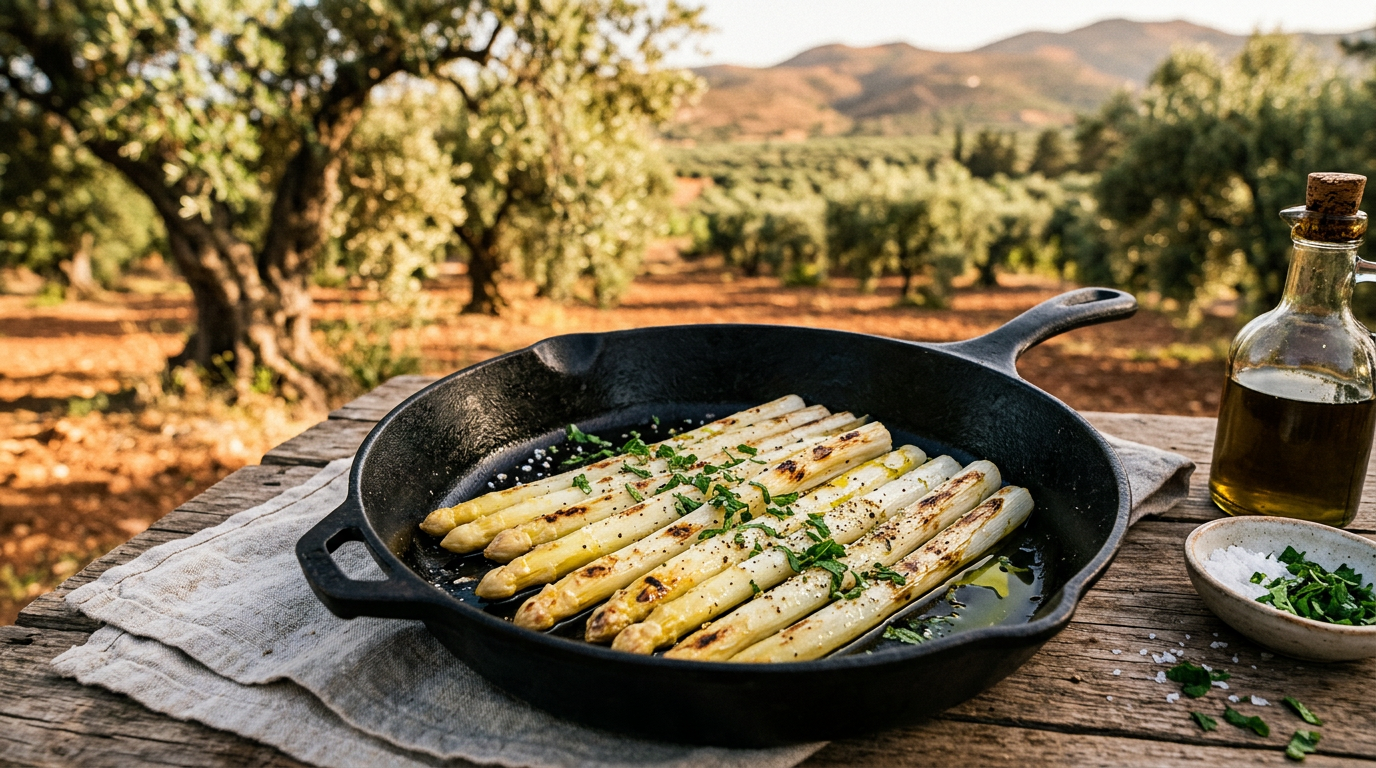
Arrange the asparagus on a large platter. Now for the final act: drizzle it generously with more fresh olive oil. Crumble about 150 g of good feta over it and garnish with a handful of freshly plucked mint leaves. The contrast between the warm, nutty asparagus, the cool, salty feta, the zesty lemon, and the peppery olive oil is simply magnificent.
💡 Tip: For a nuttier note and an extra textural kick, sprinkle the asparagus spears with toasted slivered almonds or chopped pistachios before serving. The crunch is a wonderful contrast to the soft asparagus.
Recipe 2: Warm Asparagus Salad with Olive Oil Vinaigrette and Strawberries
A salad that brings spring to your plate. The combination of asparagus and strawberries may seem surprising, but it works brilliantly. The sweetness of the fruit harmonizes with the slight bitterness of the asparagus, while the vinaigrette ties it all together. The secret is to pour the vinaigrette over the still-warm asparagus.
Vinaigrette – The Heart of the Dish
A good vinaigrette is simple, but it doesn't forgive bad ingredients. Since the olive oil plays the leading role, now is the moment to open your best bottle. For this salad, we recommend a vinaigrette that emphasizes the fruity notes. In a small bowl, whisk together 6 tablespoons of excellent Cretan olive oil from our shop, 2 tablespoons of mild white balsamic vinegar, 1 teaspoon of Dijon mustard, and 1 teaspoon of liquid honey or agave syrup. Season with salt and freshly ground black pepper and whisk into a creamy emulsion.
For the salad itself, boil or steam 1 kg of peeled asparagus until tender but still firm to the bite (8–12 minutes, depending on thickness). Cut into bite-sized pieces, about 4 cm long, and place in a large bowl. Pour the vinaigrette over the still-warm asparagus and mix gently. The warmth helps the vegetable absorb the flavors of the vinaigrette better. Let it sit for 15 minutes. Just before serving, fold in 250 g of quartered strawberries and a good handful of arugula or young spinach.
I remember a late April evening with our partners, the Drakakis family, in Sivas. After a long day preparing the olive trees for the summer, Eleni brought a huge bowl of almost this exact salad to the table. Instead of strawberries, there were small, sweet tomatoes from her garden. "The oil has to be good," said the father, Yannis, with a wink. "Otherwise, it just tastes like... salad." He was right. It's always the quality of the few ingredients that makes the difference.
Recipe 3: Creamy Asparagus Soup – Without Cream, But With Olive Oil
A velvety soup with an intense asparagus flavor is pure comfort. Most recipes rely on cream or crème fraîche for creaminess. We'll show you a trick from Mediterranean cuisine that makes the soup lighter, more elegant, and more interesting in flavor: the olive oil mount. A starchy potato provides the body, the oil provides the richness.
The Olive Oil Mount
Peel 1 kg of white asparagus, trim the ends, and set the peels and ends aside. Cut the asparagus spears into small pieces. Finely dice one large, starchy potato and one onion. Sauté the diced onion in 3 tbsp of olive oil until translucent. Add the potato and asparagus pieces and sauté briefly. Place the asparagus peels and ends in a pot, cover them just with water, boil for 20 minutes, and then strain the stock. Pour this highly aromatic stock over the vegetables until they are covered. Simmer for about 20 minutes until everything is soft.
Remove the asparagus peels and purée the soup with an immersion blender until it's as smooth as possible. Then, pass it through a fine-mesh sieve to achieve an absolutely silky texture. Now for the crucial step: reheat the soup, but do not let it boil. Remove the pot from the heat and, using a whisk, slowly stir in 4-5 tbsp of your best olive oil into the hot soup. You will see how the oil emulsifies, giving the soup an incredible creaminess and a wonderful sheen. Season to taste with salt, pepper, and a pinch of nutmeg.
💡 Tip: Serve the soup in deep bowls, garnished with the raw, finely sliced asparagus tips you set aside earlier. A final spiral drizzle of fresh olive oil on the surface makes the dish a visual highlight as well.
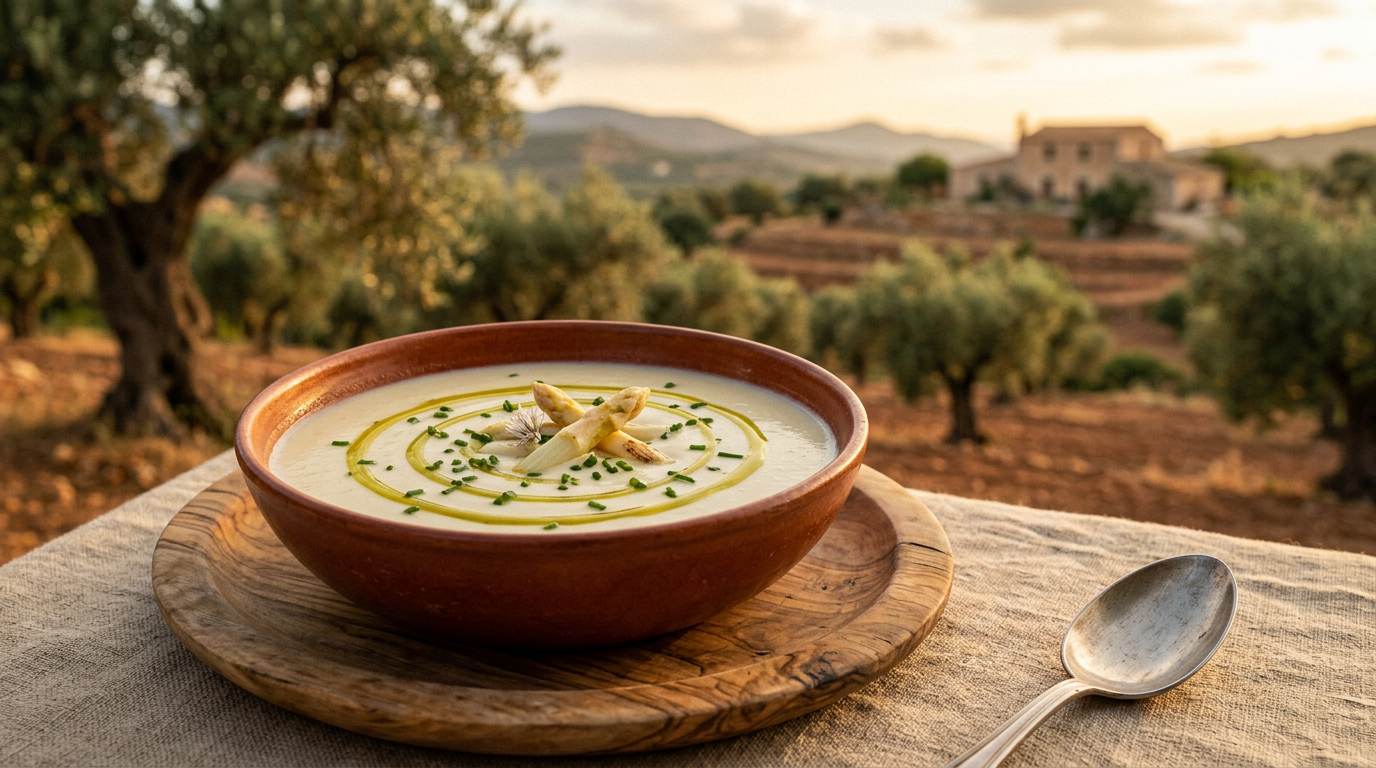
Serving a soup like this is a sign of appreciation. It's also a wonderful gift for a loved one. And what could be a more beautiful gift than the source of this flavor? With us, you can symbolically adopt your own olive tree and create a direct connection to the groves in Crete—a gift idea with deep roots.
More Than Just a Sidekick: How Olive Oil Elevates the Asparagus Experience
Using olive oil with asparagus isn't a simple swap of ingredient A for B. It's a paradigm shift that redefines the entire dish. Fat is a flavor carrier; that's well known. But while butter carries a rather one-dimensional, milky-sweet flavor, a complex olive oil brings a whole palette of aromas: the bitterness of the fresh olive, the pungency of the polyphenols, the fruitiness of green tomatoes or artichokes. The oil isn't just a carrier; it is flavor itself.
This approach requires the courage to choose quality. Yes, an artisan olive oil costs more than the one in the supermarket's one-liter can. But ask yourself why a liter of "extra virgin" olive oil there sometimes costs less than a liter of water in a fancy bottle. Exactly. Quality has its price because it's labor-intensive: early harvest with lower yield, immediate processing, gentle extraction. When you choose such an oil, you're investing in flavor and health. You're replacing saturated fats with the unsaturated fatty acids that form the heart of the Mediterranean diet.
The true art lies in the "finishing." To finish a dish with a drizzle of raw, high-quality olive oil releases its essential aromas and imparts an unparalleled freshness and depth. It's this final touch that distinguishes a good meal from an unforgettable one. If you want to cultivate this experience, you should consider becoming an olive tree sponsor. It's a wonderful way to know the origin of your oil and to support the people who produce it with passion.