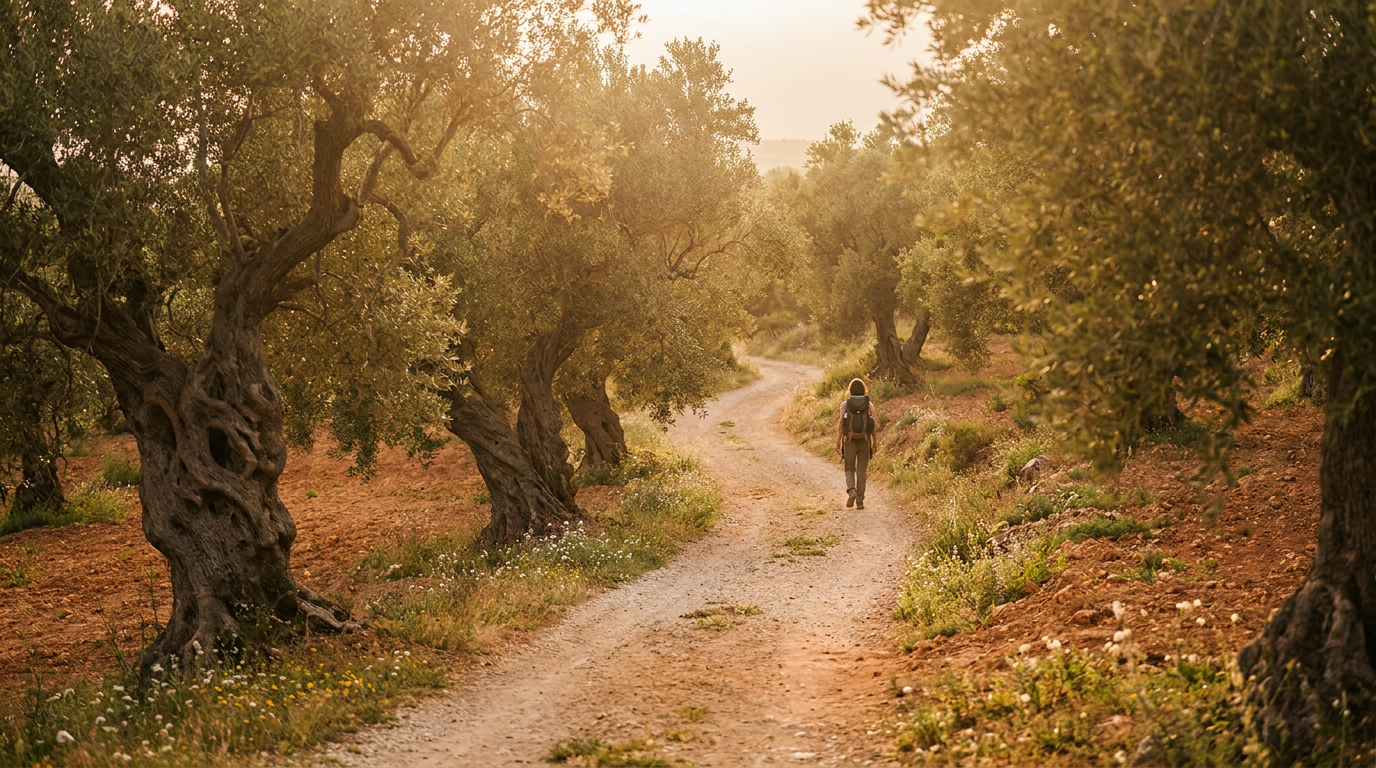
The best secret hiking trails around Sivas in May are the route via Phaistos to Kommos, the path through the Agiofarago Gorge, and the panoramic loop through the old olive groves above the village. These tours are ideal in spring because they combine blooming nature, pleasant temperatures, and historical sites without the crowds of high summer. The landscape is now in full green before the intense summer heat of Crete bathes everything in ocher and gold tones.
TL;DR:
- May offers perfect hiking weather on Crete: sunny but not too hot, and the green, blooming landscape is a feast for the eyes.
- The three secret trails presented combine culture (Phaistos), nature (Agiofarago Gorge), and agricultural heritage (ancient olive groves).
- Good footwear, sufficient water, and sun protection are essential on all tours – the Cretan sun is already powerful in May.
- After the hike, the tavernas of Sivas entice with authentic Cretan cuisine as the perfect reward.
At a glance:
- Best time: Late April to early June
- Region: Messara Plain, South Crete
- Starting point: Sivas, approx. 62 km south of Heraklion
- Difficulty: Easy to medium, suitable for hikers of average fitness
- Landscape highlights: Blooming wild herbs, ancient olive trees, rugged gorges, sandy beaches
- Culinary tip: Fresh orange juice and an olive oil tasting after the hike
Hiking on the Messara Plain: Why May is Your Perfect Month
Forget crowded beaches and the scorching heat of August. The true magic of the Messara Plain on Crete unfolds in May. During this month, hiking here is not a sporting challenge, but a celebration for the senses. The air is not just clear and warm; it's perfumed. Imagine walking along a narrow path, and with every step, the sun-warmed cushions of wild thyme and oregano release their spicy fragrance. The scent is so intense that it will linger on your clothes into the evening.
The landscape itself is an explosion of color. Between the silvery green of the olive leaves, red poppies, yellow crown daisies, and the delicate white of chamomile shine brightly. It's a vegetation that thrives on the winter's moisture, showing its full strength before the high summer sun forces it to rest. For us at Olivora, this is a special time. The Koroneiki olive trees, whose fruits produce our oil, are finishing their bloom and setting the tiny olives. It's a promise of the coming harvest in November, a quiet but powerful moment in the grove's annual cycle.
The light in May is softer, almost golden, and flatters the hilly landscape. It's the perfect light for photographers and dreamers. You can see the contours of the Asterousia Mountains to the south and the distant Ida Massif to the north with crystal clarity. Hiking in the Messara in May is more than just exercise; it's an immersion into a world that is rich, vibrant, and full of authentic Cretan character. You follow paths that Minoan priests and Venetian merchants once knew, all in a silence that would be unthinkable in July.
Secret Trail #1: From Sivas via Phaistos to Kommos Beach
This trail is a small journey through time, leading you from a traditional Cretan village through the heart of Minoan culture to the Libyan Sea. The tour starts directly on the platia of Sivas. You leave the tavernas behind and follow an old connecting path, a kalderimi, that gently winds its way out of the village and through expansive olive groves. In May, these groves are not silent monocultures, but lively gardens full of undergrowth, where bees buzz and lizards scurry over sun-warmed stones.
After about an hour, you'll reach the hill of Phaistos, the smaller but more atmospheric brother of Knossos. Phaistos is a place where you can feel the history because it's less crowded. Take your time to wander through the ruins of the Minoan palace and enjoy the wide view over the plain. From here, it's easy to imagine how the Minoan rulers looked out over this very land 4,000 years ago. The path then leads you downhill, past blooming artichoke fields and citrus groves, their sweet blossom scent hanging in the air.
The final section of the hike reveals the destination: the golden sandy beach of Kommos, stretching for kilometers before the deep blue sea. In May, you have a good chance of having large parts of this beach to yourself. It's the perfect place for a rewarding, refreshing swim. The water is still cool, but invigorating. At Kommos beach, which was once the port of Phaistos, your historical hike comes full circle.
Equipment for This Tour
For this approximately 10-kilometer route, the right equipment is crucial for the experience. The most important thing is your shoes: sturdy hiking boots with good tread are a must. The old paths can be uneven and rocky. Also essential are a sun hat, sunglasses, and sunscreen with a high SPF. Pack at least 1.5 liters of water per person. Nuts, dried fruits, or a simple sandwich make for a good snack – there are no refreshment stops until the small taverna at Kommos beach.
Secret Trail #2: Through the Agiofarago Gorge to the Hidden Sea
The Agiofarago Gorge, the "Gorge of the Saints," is a place of special spiritual power and rugged beauty. From Sivas, it's a short drive to the entrance of the gorge, where you park your car and continue on foot. The path itself is technically easy and leads you for about 45 minutes through a mostly dry riverbed, flanked by high, vertical rock walls where hundreds of birds nest. The gorge's name comes from the hermits who once retreated into the caves of the rock walls to live in solitude.
Halfway through, in the shade of some old olive trees, you'll find the small chapel of Agios Antonios. It's a peaceful place to pause for a moment. Sometimes you might encounter goats here, curiously peering from the rocks. Father Yannis Drakakis showed us this gorge many years ago. He always said, "Here, you not only clean the dust from your shoes, but also the worries from your soul." For this trip, he often takes only a small loaf of bread, tomatoes, and a bottle of our olive oil – for him, the best meal after a swim in the cool sea.
The highlight of the hike is the moment the gorge suddenly opens up to reveal a breathtaking pebble beach, lapped by crystal-clear, turquoise water. The beach of Agiofarago is a natural jewel. The feeling of diving into the sea after the march through the sun-warmed gorge is indescribable. This place feels like a gift. If you're looking for a present that is just as genuine and unforgettable, you can give a piece of Crete as a gift through a sponsorship and bring someone a very special joy.
Secret Trail #3: The Panoramic Loop of Ancient Olive Trees
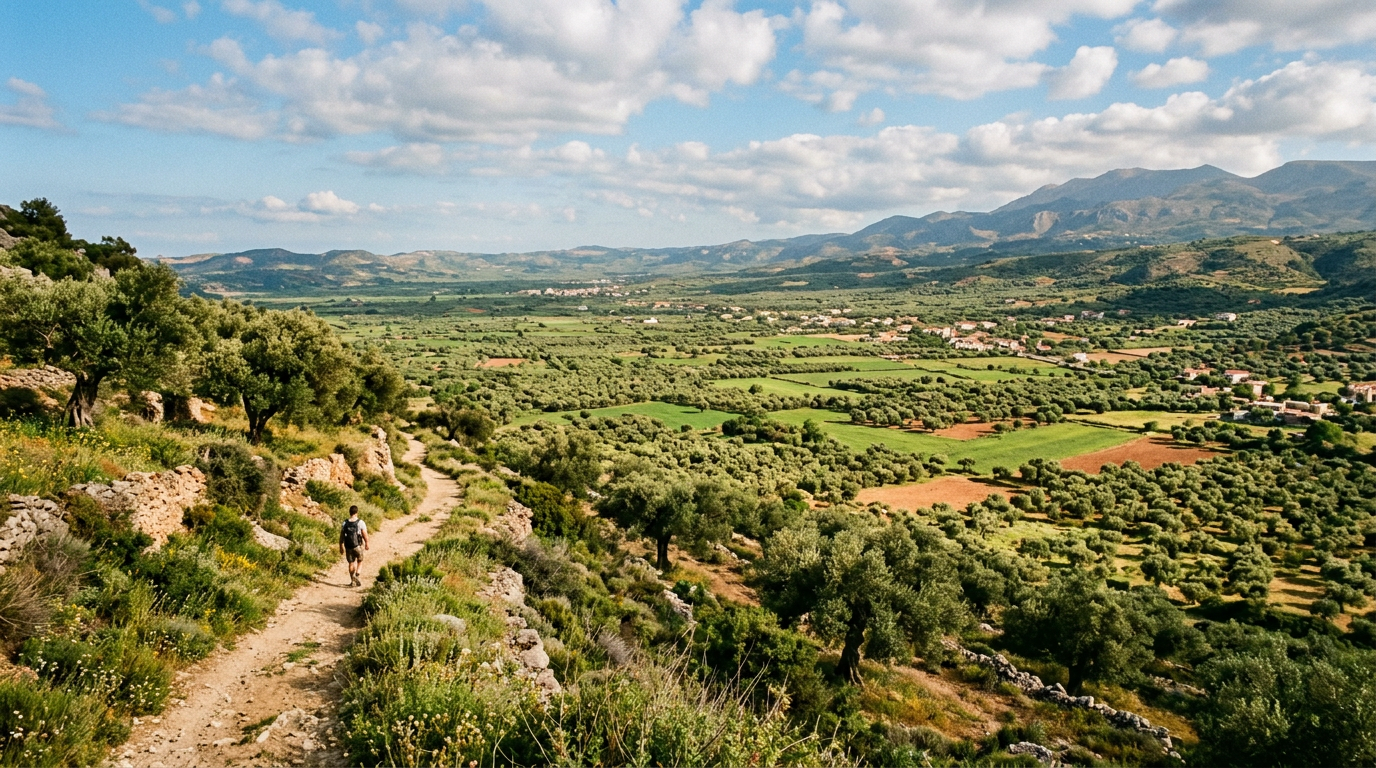
This circular hike is a tribute to the heart of Crete and our work at Olivora: the olive tree. The route also starts in Sivas but leads you not towards the sea, but up the slopes towards the Odigitria Monastery. You follow a network of old farm tracks that wind through a sea of olive groves. Here they stand: the true monuments of the Messara. Ancient, gnarled olive trees, their trunks marked by centuries. Some of these trees were already here when the Venetians ruled Crete. They are a living museum.
This hike is special because it offers you a different perspective. You look down on the plain from above, see the geometric patterns of the fields and groves, the village of Sivas nestled in a hollow, and in the distance, the glittering ribbon of the sea. It's a sight that is humbling and illustrates the deep connection between the people and this land. Up here, you understand why olive oil is more than just a food. It is culture, history, and the result of hard work over generations.
💡 Tip: Bring a pair of binoculars. From the higher points of the trail, you can not only spot the archaeological site of Phaistos but, with a bit of luck, also the small boats sailing out from Agia Galini.
How to Spot the Koroneiki Olive in May
On this hike, you get up close to the trees that give us our "liquid gold." But how do you recognize a Koroneiki olive? Look for the small, lance-shaped leaves. They are deep green on top and an almost luminous silver on the underside. This contrast makes the trees shimmer in the wind. In May, the trees are particularly vital. If you look closely, you might discover the tiny, cream-white blossoms or the newly set fruit buds, no bigger than a pinhead. From these inconspicuous beginnings, the small but highly aromatic Koroneiki olive will ripen by the harvest in late autumn, known for its high polyphenol content.
The Right Preparation: What Belongs in Your Backpack
On Crete, good preparation is the difference between an enjoyable hike and a grueling march. Besides the basics already mentioned, there are a few Cretan tricks. Instead of just drinking water, many locals prepare a cold mountain tea, malotira. It's refreshing and considered invigorating. Even more important are the provisions. The Cretan hiking snack is simple but brilliant: paximadi (hard barley rusks), a few juicy tomatoes, a handful of olives, and a piece of Myzithra cheese.
The real secret, however, lies in the dressing, which you prepare fresh on the spot: a generous splash of excellent olive oil. Imagine sitting under an ancient olive tree, whose ancestors knew the Minoans, and enjoying the oil that comes from trees just like it. As a member of the Harvest Club, this isn't just a romantic notion, but a lived reality. You hold the result of this landscape directly in your hands.
💡 Tip: A small pocketknife and a small wooden cutting board weigh almost nothing but will transform your break into a small feast. This way, you can slice tomatoes and cheese on the spot and enjoy them.
Footwear – The Biggest Mistake Crete Hikers Make
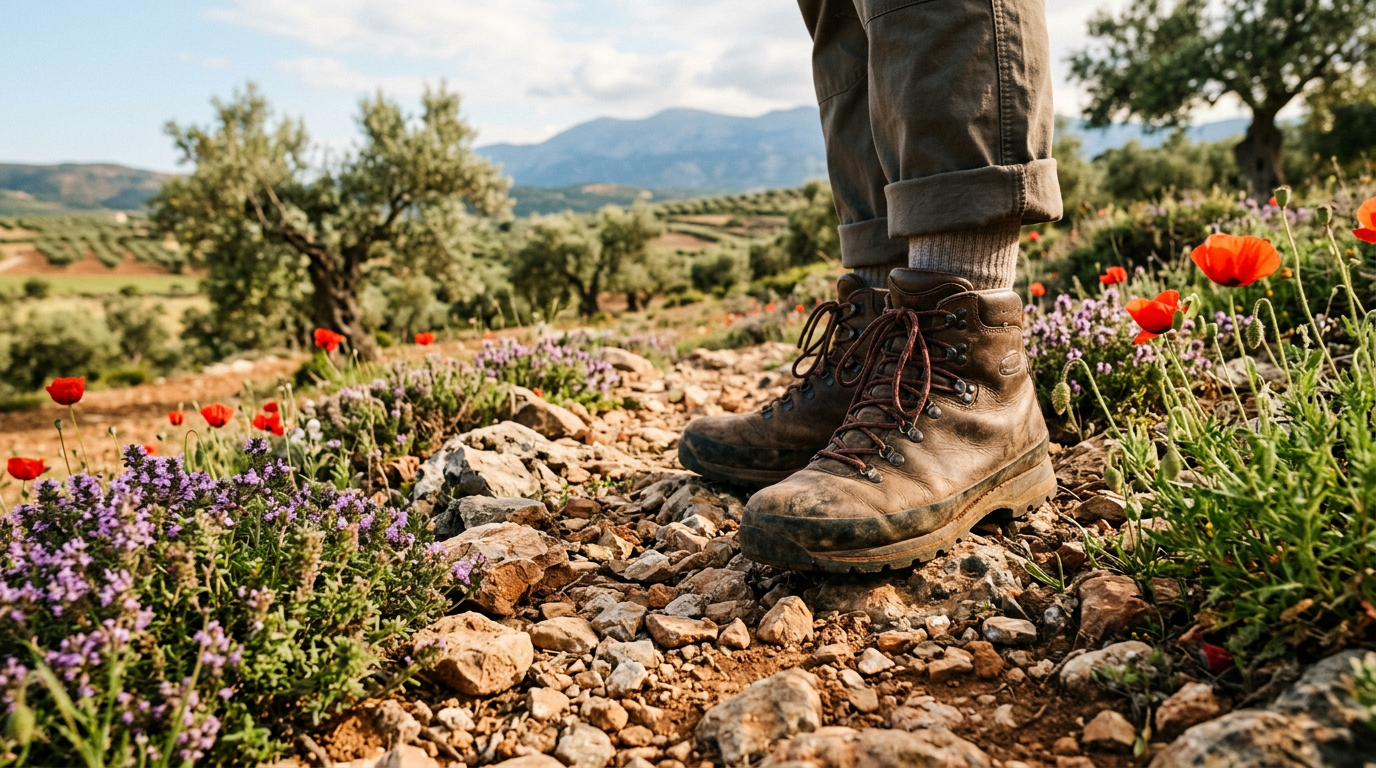
We have to emphasize this again because we see it every year: hiking on Crete is not for sandals or flip-flops. Even if the path seems easy, the trails are lined with prickly plants, thorny bushes, and sharp stones. Sturdy, ankle-high hiking boots not only protect you from these but also give you the necessary grip on loose scree. Anyone who hikes here in flip-flops learns the hard way why the Cretans are such a stoic people. They've probably already been through it.
After the Hike: Cretan Rewards in Sivas
The experience doesn't end when you take off your hiking boots. Now the enjoyable part begins. The village square of Sivas is the perfect place to watch life go by and replenish your energy reserves. In tavernas like "Sirtaki" or "Vafis," you'll find authentic Cretan cuisine that thrives on local products. Order dishes you won't find everywhere: chochlioi boubouristi (fried snails with rosemary), lamb antikristo, or simply a Greek salad made only of sun-ripened tomatoes, cucumbers, onions, feta, and a splash of the best olive oil.
The true measure of a taverna's quality is the olive oil on the table. Is it a mild, anonymous oil or a characterful, peppery "extra virgin"? Don't hesitate to try it pure with some bread. A good olive oil should cause a slight tickle in your throat – a sign of valuable polyphenols. If you want to learn how to separate the wheat from the chaff, our sensory guide to olive oil quality will help. It will make you a connoisseur at the taverna table.
A hike through the olive groves often awakens a desire to learn more about these fascinating trees. They are the cultural backbone and livelihood of Crete. If this thought stays with you, you can adopt your own olive tree through a sponsorship. This not only secures you your own excellent olive oil annually but also supports the preservation of this unique cultural landscape and the small-scale farming structures in the Messara Plain.
Frequently Asked Questions
How difficult are the hikes really? The tours presented are rated as easy to medium. They do not require alpine experience, but a good basic level of fitness and sure-footedness. The paths are mostly clear, but can be rocky and uneven. The total walking time for each is between 2 and 4 hours.
Can I hike alone in the Messara Plain? Yes, it is generally safe, especially on the routes described here. However, always inform someone of your planned route and your expected return time. In the summer months, you should never hike alone during midday due to the heat. In May, however, the conditions are ideal.
Are there water sources on the trails? No, do not rely on them. There are no reliable drinking water sources in the Agiofarago Gorge or on the panoramic loop. You must bring enough water for the entire tour. In May, plan for at least 1.5 liters per person.
What animals might I see on the hikes? You will mostly encounter sheep and goats. With a bit of luck, you might see birds of prey like the bearded vulture or smaller falcons. Lizards and geckos are ubiquitous. Snakes are extremely rare and shy, which is why sturdy footwear is still a good precaution.
Is May absolutely the best time to hike on Crete? For the coastal and hilly regions like the Messara, May, along with October, is the best time. Nature is in bloom, the temperatures are pleasant, and the tourist crowds are manageable. For high mountain hikes in the White Mountains, there can still be snow in May.
Do I need a hiking map or an app? It's not strictly necessary for these well-marked trails, but it's always recommended. Hiking apps like Komoot or AllTrails have many routes in Crete mapped out. An offline map on your smartphone gives you extra security, as cell reception can be weak in gorges or remote valleys.
What if I'm interested in the history behind the olive trees? A hike is the best start. If you're looking for a deeper connection, an olive tree sponsorship on Crete is the next step. You not only receive the oil from your tree but also regular updates from the grove and become part of our community dedicated to preserving this ancient tradition.