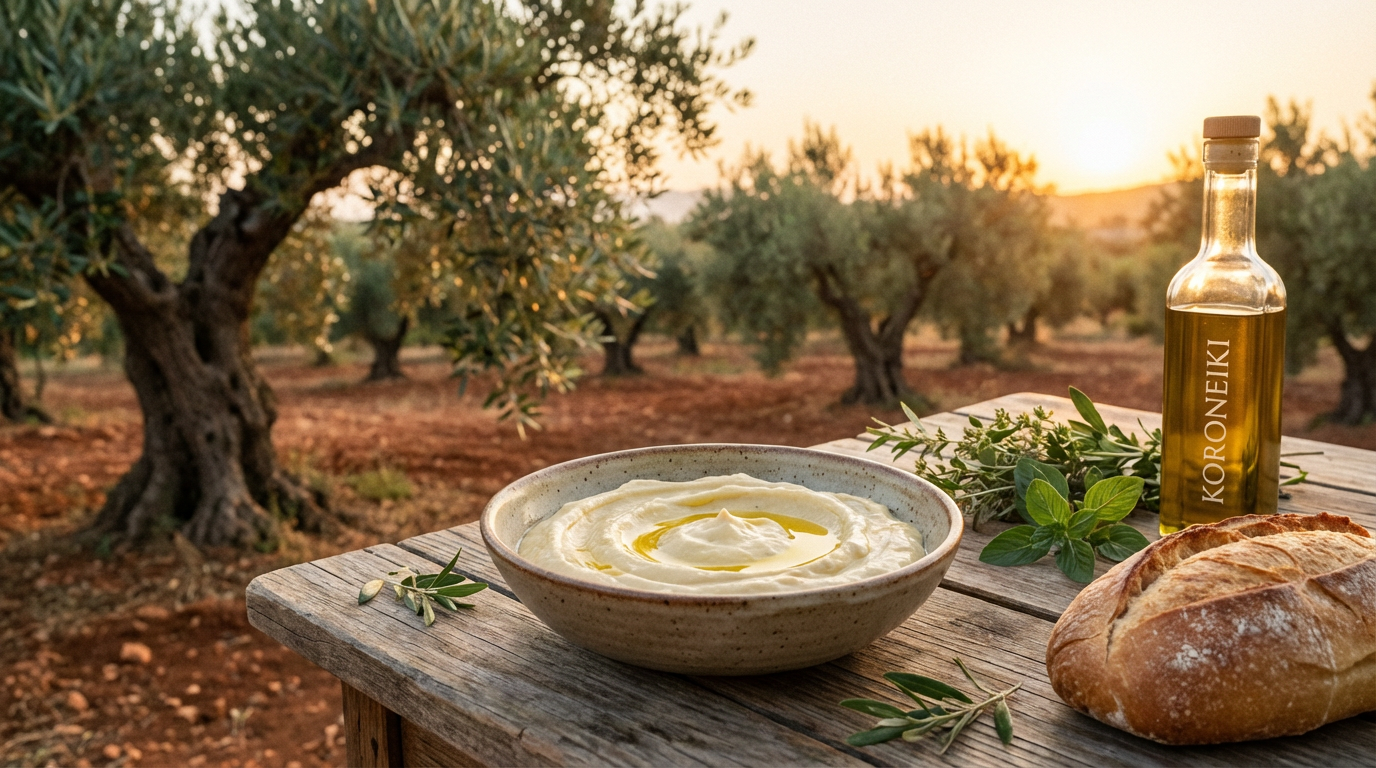
Vegan aioli without egg that becomes creamy and stable in under two minutes is reliably achieved through the emulsifying power of soy milk combined with a high-quality olive oil. The lecithin naturally present in soy acts as a binding agent between the oil and water components, thus replacing the function of egg yolk. A high-speed immersion blender is the key tool for creating a fine and lasting emulsion.
TL;DR:
- Vegan aioli without egg works because the lecithin in soy milk acts as a natural emulsifier, binding oil and water.
- The ideal mixing ratio is 1 part room-temperature soy milk to 2 parts high-quality, extra virgin olive oil.
- An immersion blender is essential for a quick and stable emulsion; preparation takes less than 2 minutes.
- The quality of the olive oil is the main determinant of flavor—a fruity, peppery oil creates an aioli with strong character.
At a glance:
- Principle: Emulsion via soy lecithin
- Preparation time: approx. 2 minutes
- Base ingredients: Soy milk, olive oil, garlic, mustard, lemon juice, salt
- Recommended oil: Olivora Koroneiki extra virgin olive oil
- Chemistry: Amphiphilic lecithin molecules envelop oil droplets in an aqueous solution.
- Shelf life: Up to 7 days in the refrigerator in an airtight container.
Vegan Aioli Without Egg: The Secret of the Soy Milk Emulsion
Classic aioli is an emulsion of egg yolk and oil. The lecithin in the egg yolk is the star of the process: it's an amphiphilic molecule, meaning it has a water-loving (hydrophilic) head and a fat-loving (lipophilic) tail. When you add oil to an aqueous liquid like lemon juice and whisk them vigorously, the lecithin molecules surround the tiny oil droplets. Their fat-loving tails protrude into the oil droplet, while their water-loving heads point outward into the surrounding liquid. This prevents the oil droplets from merging back into a large pool. A creamy, stable emulsion is formed. In the vegan version, the egg is missing, but the principle remains the same. The trick is to find a plant-based substitute for the lecithin from the egg yolk. And this is where soy milk comes into play.
Soybeans are naturally rich in lecithin. That's why soy milk is the only plant-based milk with which this feat can be reliably achieved. Neither oat, almond, nor rice milk possesses these emulsifying properties in sufficient quantities. The concentration of lecithin in commercial soy milk is ideal for binding two to three times its own volume in oil. The result is a surprisingly stable, thick cream that is in no way inferior in texture to a traditional mayonnaise or aioli. From a physical standpoint, a vegan aioli with soy milk is an oil-in-water emulsion where soy lecithin plays the role of mediator. The science behind it is elegant—and thankfully, the practical application in the kitchen is child's play.
The Right Olive Oil: Why Quality Decides Between Success and Failure
An aioli is only as good as the oil it's made from. This rule applies to the classic version and even more so to the vegan one. Since the aioli consists of about two-thirds oil, its flavor is not just an ingredient but the defining characteristic of the entire dip. Using a bland, tasteless, or even rancid supermarket oil inevitably leads to a bland, tasteless, or—worse—unpleasantly flavored aioli. Anyone who skimps here is only cheating their own palate. Yes, good olive oil has its price. If you're not willing to accept that, you'd be better off buying sunflower oil and calling the result "garlic cream."
For an expressive, authentic aioli, you need an olive oil with personality. A young, extra virgin oil with a high polyphenol content, like our Olivora Koroneiki oil, is the perfect choice. The polyphenols in olive oil, which are responsible for that slight tickle in the throat, bring a pleasant pungency and a bitter-peppery note that harmonizes wonderfully with the strong garlic. The aroma of freshly cut grass, green tomato, and artichoke, typical of our oil from the Messara plain on Crete, perfumes the aioli in a way that a refined oil never could. The fruity notes balance the sharpness of the garlic and the acidity of the lemon juice, while the peppery intensity creates a long, warm finish. This is no longer a mere side dish; it's a statement.
The Step-by-Step Guide: Vegan Aioli in 120 Seconds
The preparation is incredibly simple and fast. The most important thing is to have the ingredients ready and to use a powerful immersion blender (stick blender). The tall, narrow container of the immersion blender is ideal as it forces the liquids to circulate through the blades, promoting a rapid emulsion.
The Ingredients in Detail
- 100 ml unsweetened soy milk (room temperature): The emulsifier. "Unsweetened" is important to avoid a sweet note. Room temperature helps the emulsion start more quickly.
- 200 ml high-quality, extra virgin olive oil: The heart of the matter. We recommend our fruity and intense Cretan olive oil from the shop.
- 2–3 garlic cloves: Depending on the desired intensity. Fresh and of good quality, not dried out or sprouting.
- 1 tsp Dijon mustard: Mustard also contains lecithin and acts as an additional "safety emulsifier." It also adds a fine spiciness.
- 1–2 tbsp fresh lemon juice: The acidity brightens the flavor and balances the richness of the oil.
- ½ tsp salt: Enhances the flavors of all other ingredients.
The Perfect Tool: Why the Immersion Blender is Unbeatable
The magic happens through high shear forces. An immersion blender creates a strong suction and extremely fast blade movements. When you place the blender head on the bottom of the container and turn it on, a vortex is created. Now, slowly add the oil. It gets caught in this vortex and is torn into microscopic droplets. These tiny droplets are immediately enveloped by the lecithin from the soy milk. Neither a stand mixer (too large a container, too little suction at the bottom) nor a whisk (too low speed) can perform this physical feat so efficiently and quickly. The immersion blender is not just a tool here; it's the guarantee of success.
Troubleshooting: What to Do if the Aioli Doesn't Thicken?
Even though the recipe is very reliable, things can sometimes go wrong. Here are the most common causes and solutions:
- The aioli is too runny: This usually happens when the oil was added too quickly before a base emulsion could form. Solution: Start over. Take 2-3 tablespoons of the failed mixture as a base in a clean container (it contains all the ingredients, after all) and, while blending continuously, very slowly add the rest of the runny mixture as if it were pure oil. This should rescue the emulsion.
- The wrong milk was used: The recipe only works with soy milk. Oat, almond, or rice milk do not contain enough lecithin.
- The ratio is off: Too much milk and not enough oil will result in a thin sauce. Stick to the 1:2 ratio. You can even go up to 1:3 (milk to oil) to get an even firmer, almost sliceable cream.
💡 Tip: For an extra-intense garlic flavor, first grind the garlic into a fine paste in a mortar with a pinch of salt. The salt breaks down the cell walls and releases the essential oils, resulting in a rounder, deeper aroma.
Variations & Refinements: From Saffron to Smoked Paprika
The basic aioli is a culinary chameleon and the perfect canvas for creative modifications. Once the emulsion is stable, you can add almost any flavor you like. The only important thing is not to add too much extra liquid, so as not to compromise the stability of the cream. Powders, pastes, and chopped herbs are ideal.
Some of our favorite variations, which we often serve with grilled vegetables in our grove on Crete:
- Saffron Aioli: Dissolve a small pinch of saffron threads in a tablespoon of warm water and stir it into the finished aioli. It imparts a bright yellow color and an earthy, luxurious aroma. Pairs perfectly with fish dishes or paella.
- Herb Aioli: Add a handful of finely chopped fresh herbs like parsley, chives, dill, or basil. In spring, a version with fresh wild garlic is a revelation, similar to our Wild Garlic Pesto Deluxe.
- Smoked Paprika Aioli: A teaspoon of smoked paprika (Pimentón de la Vera) and a pinch of cayenne pepper transform the aioli into a fiery Spanish dip that goes wonderfully with patatas bravas.
- Lime-Cilantro Aioli: Replace the lemon juice with lime juice and add a good amount of chopped fresh cilantro. A fresh, zesty variation for tacos, burritos, or grilled corn.
There are hardly any limits to creativity. Experiment with curry powder, harissa paste, or even a spoonful of miso for an umami-rich depth. The vegan aioli is a forgiving base that makes it easy for you to develop your own signature dip.
What Does Vegan Aioli Go With? More Than Just a Dip
To consider aioli merely a dip for bread or french fries would be a culinary understatement. Its creamy texture and intense flavor make it a versatile all-rounder in the kitchen. In Mediterranean cuisine, it is an indispensable companion to a variety of dishes, bringing a welcome creaminess and spice.
Especially now in April, when the first German asparagus hits the market, a bowl of fresh aioli is a wonderful alternative to classic hollandaise sauce. The combination of tender, white asparagus and a robust aioli made with our olive oil is puristic and elegant. But it also pairs excellently with grilled green asparagus. Furthermore, it is the perfect addition to a tapas platter: with olives, artichoke hearts, pimientos de Padrón, or simply with toasted country bread.
Use the aioli as a rich spread for sandwiches and burgers. It gives a simple vegetable sandwich an unexpected depth or makes a vegan burger juicy and flavorful. A dollop of aioli on a hot vegetable soup or stew will melt slightly and provide a creamy enrichment. It can also be used as a base for creamy salad dressings: simply thin it with a little water or more lemon juice until the desired consistency is reached. You see: a good, homemade vegan aioli is a kitchen staple.
💡 Tip: Use room-temperature soy milk. Cold liquids can make emulsification more difficult, as the oil becomes firmer when cold. A small trick with a big impact for a guaranteed creamy consistency.
From Tree to Jar: The Journey of Our Koroneiki Oil
When you prepare our vegan aioli with Olivora oil, you taste more than just olives—you taste a place and a story. The journey of this oil begins in the sun-drenched Messara plain in southern Crete, where our olive groves are located. This is where the small, resilient Koroneiki olive grows, known for its exceptionally high polyphenol content and intense aroma. Unlike many industrial producers, we begin our harvest as early as mid-October, when the olives are still green and full of peppery power. This early harvest time reduces the yield but maximizes the quality and health benefits of the oil.
I remember last November when Father Yannis of the Drakakis family, right at the mill in Sivas, tasted the first sip of the freshly pressed, bright green oil. He closed his eyes, nodded slowly, and said only: "Pepper. Good year." This peppery tickle in the throat, a sign of high-quality polyphenols, is exactly what elevates an aioli from "nice" to "unforgettable." It is the soul of the Koroneiki olive that resonates in your aioli. After the harvest, the olives are cold-extracted at the family mill within a maximum of six hours. This means the temperature never exceeds 27 degrees Celsius. This is the only way to preserve the volatile aromas and valuable ingredients.
This level of care and craftsmanship is rare today. It is a process we maintain for the members of our Harvest Club, who receive their personal bottling from our private grove each year. For them, we reserve the very best batches. If you appreciate this connection to a specific piece of land and its harvest, you can become a member of the Harvest Club and secure exclusive access. Or you can take an even more personal step and opt for an adoption of a Cretan olive tree. By doing so, you not only support traditional cultivation but also receive the oil from "your" tree—a wonderful way to bring a piece of Crete into your home. It's also a special idea if you're looking for a sustainable and personal present and want to gift an olive tree.
Frequently Asked Questions
Why does the recipe only work with soy milk? Soy milk is the only widely available plant-based milk that naturally contains a high concentration of lecithin. This lecithin acts as an emulsifier, stably binding the oil and water phases together. Other milk alternatives like oat or almond milk do not have this property, which is why the emulsion would not succeed with them.
My aioli turned out bitter, what did I do wrong? Bitterness in an olive oil aioli can have two causes. First: a very polyphenol-rich olive oil is naturally bitter, which is a sign of quality. Second: mixing for too long or too intensely after the emulsion has already formed can break down the polyphenols and release additional bitter compounds. So, only blend until the aioli is firm.
How long does the vegan aioli keep? Stored in a clean, airtight glass container in the refrigerator, homemade vegan aioli will keep for about 5 to 7 days. Since it contains no raw eggs, it is even slightly safer from a microbiological point of view than the classic version. Proper storage is key, see our guide on storing olive oil correctly.
Can I use an oil other than olive oil? Yes, the basic recipe works with any liquid vegetable oil. You can use a neutral oil like rapeseed or sunflower oil for a milder, mayonnaise-like cream. However, the characteristic, Mediterranean flavor of a true aioli only comes from using a high-quality, aromatic extra virgin olive oil.
Why isn't my aioli as bright white as store-bought versions? The color of your aioli depends directly on the color of your olive oil. A young, green olive oil from an early harvest will produce an aioli with a gentle, yellow-green shimmer. Industrially produced products often use bleached oils and sometimes even colorants like titanium dioxide to achieve an unnaturally pure white. Your homemade color is a sign of naturalness.
Can I freeze the aioli? No, freezing an emulsion like aioli is not recommended. Upon thawing, the bond between oil and water would separate, resulting in a grainy, oily mass. The creamy texture is completely lost in the process. It's better to make a smaller, fresh batch that you can use within a week.
Which soy milk is best suited for this? An unsweetened organic soy milk without any other additives is best. "Unsweetened" is crucial to avoid altering the savory taste. Products labeled "Soy Drink" often contain thickeners or flavorings that can affect the result. A simple ingredient list (water, soybeans) is usually the best choice.