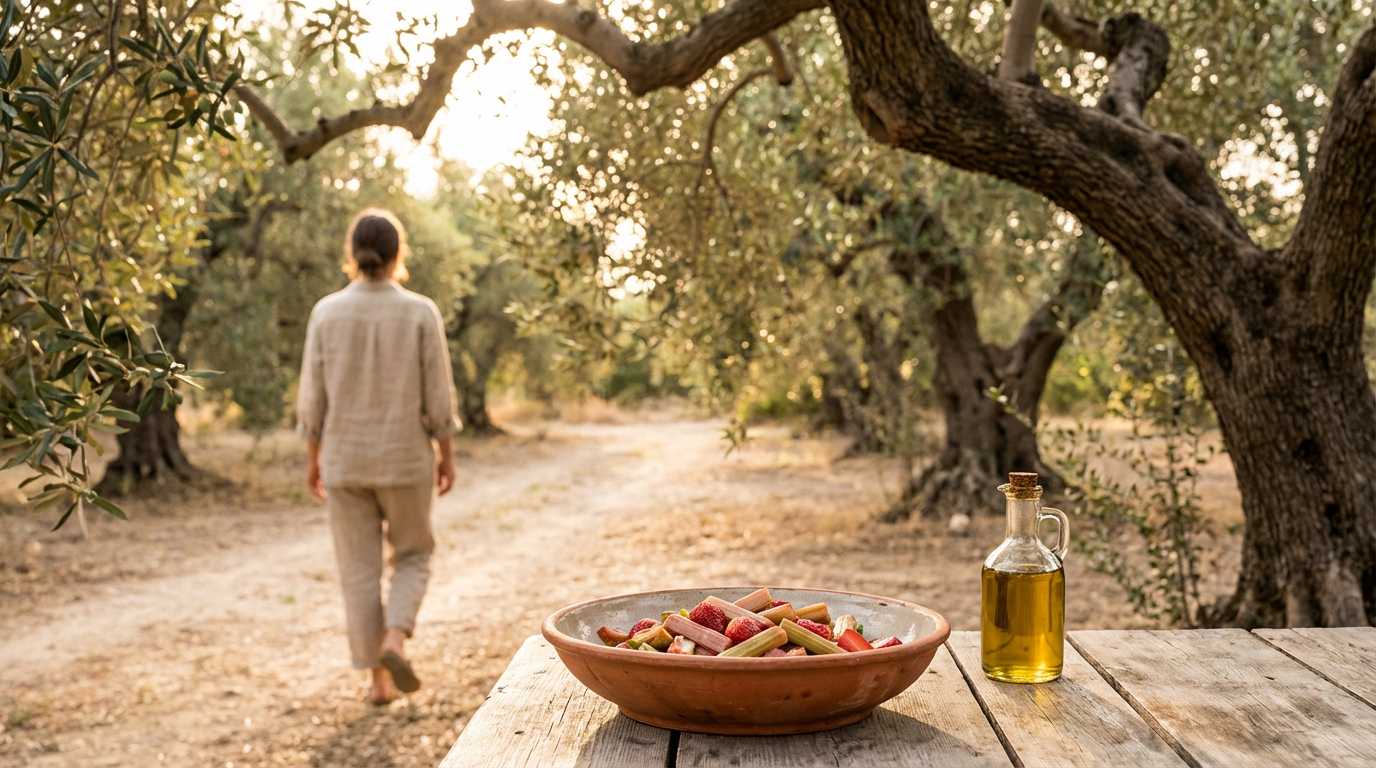
The secret to an outstanding rhubarb-strawberry salad isn't a complex vinegar infusion, but the targeted use of a single, decisive player: a peppery, fruity olive oil. A first-class, extra virgin olive oil like our Koroneiki oil from Crete tames the sharp acidity of the rhubarb and enhances the sweetness of the strawberries, rather than masking them like vinegar does. It creates a balance that elevates the salad from a simple side dish to a standalone course.
TL;DR:
- For the best texture and flavor, slice raw rhubarb paper-thin, preferably with a mandoline slicer.
- The dressing's secret is the emulsion: a high-quality, peppery olive oil, lemon juice, a little honey, and a pinch of salt are all you need.
- Olive oil is the key because it harmoniously balances the rhubarb's acidity and the strawberries' sweetness, rather than competing with them with acetic acid.
- A single-varietal Koroneiki olive oil is ideal, as its green, peppery notes complement and deepen the salad's fruity aromas.
At a glance:
- Dish: Rhubarb-Strawberry Salad with Olive Oil Dressing
- Preparation time: 20 minutes
- Secret ingredient: Fresh, peppery Koroneiki olive oil (acidity < 0.3%)
- Oil's origin: Messara Plain, South Crete, Greece
- Pairs ideally with: Grilled halloumi, goat cheese, or as a light dessert with mascarpone.
- Seasonal relevance: Perfect for the months of April to June.
The Recipe: Rhubarb-Strawberry Salad with That Certain Something
This recipe celebrates spring and the simple elegance of good ingredients. It deliberately omits anything superfluous and focuses on the essentials: the contrast of tart and sweet, of crisp and soft. The deciding factor here isn't a long list of ingredients, but the quality of each individual product—above all, the olive oil.
Ingredients for 2–4 people:
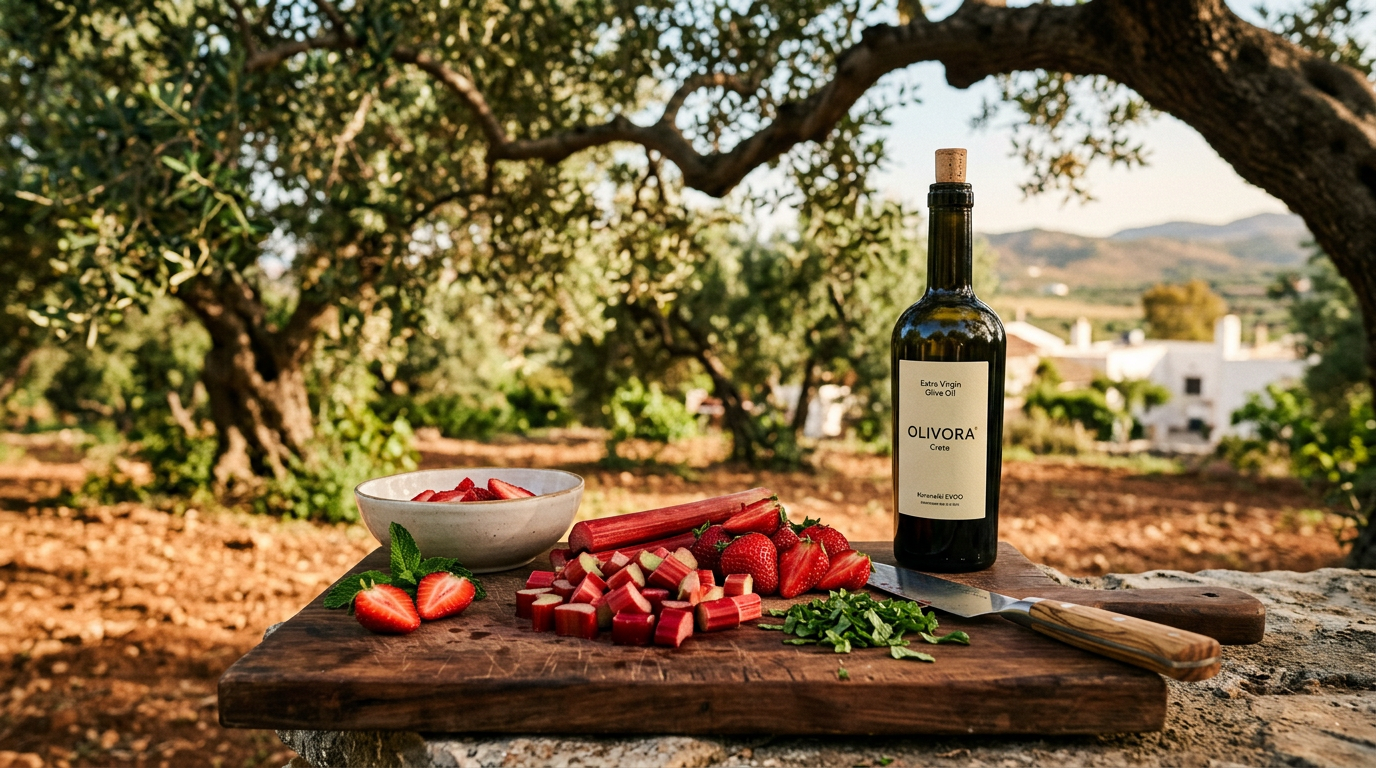
- 2 stalks of fresh rhubarb (approx. 200 g), ideally the red, more tender raspberry rhubarb
- 250 g ripe, aromatic strawberries
- 50 ml Olivora Koroneiki olive oil (or another high-quality, peppery extra virgin olive oil)
- Juice of half an organic lemon
- 1–2 tsp liquid honey (acacia or a mild blossom honey works well)
- A generous pinch of sea salt flakes
- Freshly ground black pepper
- Optional: A handful of fresh mint leaves, toasted slivered almonds or pistachios, crumbled feta or goat cheese
Preparation in 3 steps:
-
Preparation: Wash the rhubarb, trim the ends, and use a vegetable peeler or mandoline slicer to cut the stalks lengthwise into paper-thin ribbons. This is the most important step, as the fine texture makes the raw rhubarb tender and easy to digest. Wash the strawberries, remove the hulls, and halve or quarter them depending on their size.
-
The Dressing: In a salad bowl, vigorously whisk the olive oil, lemon juice, honey, and salt flakes with a whisk or fork until a slightly creamy emulsion forms. This is the moment when the flavors combine. If you want to understand how to recognize a high-quality extra virgin olive oil, you should taste the dressing on its own: it doesn't taste greasy, but fresh and complex.
-
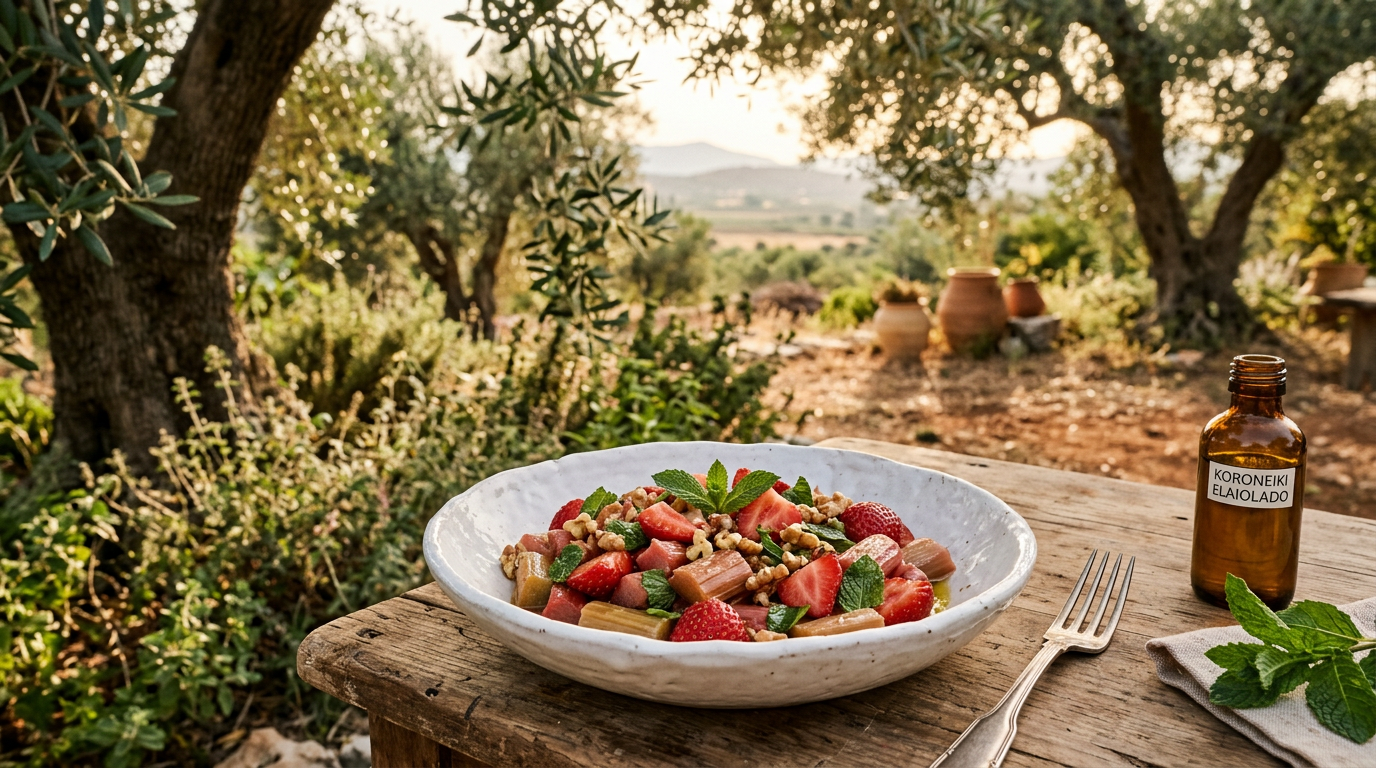
Finishing: Add the rhubarb ribbons to the dressing in the bowl and gently toss. Let it marinate for about 10–15 minutes. This process essentially "cooks" the rhubarb cold, making it wonderfully tender. Just before serving, fold in the strawberries and optional ingredients (mint, nuts, cheese). Season with another pinch of salt and freshly ground pepper and serve immediately.
Why Olive Oil is the Better Dressing for This Salad
Conventional wisdom says a dressing needs vinegar for acidity. In this salad, that would be a mistake. The rhubarb already brings an intense, fruity acidity (primarily malic and citric acid, less oxalic acid than often feared). If you were to add acetic acid, you'd create a battle of acids on the tongue that would simply overwhelm the delicate flavors of the strawberry. It's a bit like wearing noise-canceling headphones blasting heavy metal to an already loud concert.
A high-quality olive oil doesn't act as another source of acid here, but as a harmonious mediator. In this dressing, olive oil is the crucial emulsifier because it binds the watery components (lemon juice, fruit juice) and the fat-soluble aromas into a stable, creamy sauce. This emulsion coats every piece of rhubarb and every strawberry with a silky film. This film has two functions: it softens the sharp acidity of the rhubarb while simultaneously protecting the delicate sweetness of the strawberry. The fat in the oil is also a flavor carrier. It dissolves the aromas from the fruits and herbs and distributes them evenly in the mouth. The result is a rounder, fuller, and more complex taste experience.
The choice of oil is not trivial. A mild, neutral oil would technically do the job, but would contribute nothing in terms of flavor. An intense, peppery oil like our Koroneiki from the Messara Plain acts as a spice in its own right. Its green notes of freshly cut grass and the slight sharpness on the finish, which comes from the valuable polyphenols, create a fascinating counterpoint to the fruit's sweetness.
The Choice of Oil: Why Koroneiki from Crete Makes the Difference
Not every olive oil is suitable for this salad. An overly mild, old oil from the supermarket shelf would be lost in terms of flavor and would only add fat. For this salad, you need an oil with character, an oil that tells its own story. The Koroneiki olive, the queen of Greek olive varieties, is exactly that—it's the self-assured leading lady, so to speak, who doesn't steal the show from her co-stars rhubarb and strawberry, but makes them better.
The Koroneiki olive, which we cultivate in the groves around Sivas in the Messara Plain on Crete, is small, almost inconspicuous. But a remarkable intensity is concentrated within it. Its high polyphenol content—the olive's natural antioxidants—gives the oil not only its health benefits but also its distinctive flavor profile. For the olive, polyphenols are what tannins are to wine: they provide structure, a pleasant bitterness, and are responsible for the peppery tickle in the back of the throat. It is precisely this bitter note that balances the sweetness of the honey and strawberries, while the pepperiness elegantly counters the acidity of the rhubarb.
Peppery, Bitter, Fruity: The Flavor Profile of Olivora Oil
When you open a bottle of our freshly harvested oil, you don't smell a heavy, greasy odor. You smell what our harvest helpers from the Drakakis family smell at the end of October: freshly cut grass, green tomatoes, a hint of artichoke. The oil is cold-extracted at under 27°C within six hours of harvesting. This quick and gentle process is crucial for capturing these volatile, precious aromas. When you bring this oil together with the fruit, something special happens. The green notes of the oil merge with the green acidity of the rhubarb. The fruity tones of the oil—you can detect traces of green apple or almond—complement the ripe sweetness of the strawberry. It's a dialogue of flavors, not a monologue. This quality is only possible because every step, from tending the trees to bottling, is in our hands. An exclusivity that we make available to connoisseurs and enthusiasts through our premium olive oil club.
💡 Tip: Marinate the paper-thin rhubarb slices in the dressing alone for 10 minutes before adding the strawberries. This essentially "cold-cooks" it, making it more tender and removing its aggressive acidity without letting it get mushy.
Understanding Rhubarb: More Than Just a Compote Vegetable
Rhubarb has an image problem. Many people only know it cooked down into a tart compote or as a filling for crumble cake, often drowned in sugar to tame its acidity. But raw and properly prepared, rhubarb is a revelation: crisp, refreshing, and with a complex acidity that goes far beyond just 'sour.' For this salad, using it raw is crucial to preserve its vibrant texture and full flavor.
Botanically, rhubarb is a vegetable from the knotweed family. It owes its acidity mainly to malic and citric acid, which explains why it harmonizes so well with fruit. The often-discussed oxalic acid is present, but it's concentrated mainly in the leaves (which are poisonous and must not be eaten) and the skin. With the tender, red varieties available early in the season, and with moderate consumption, the level in the stalks is harmless. The key to preparing it raw lies in the cutting technique. Thick pieces would be woody and unpleasantly sour. Shaved paper-thin, the cell structure is broken down, and the rhubarb becomes flexible and tender. You could say it's mechanically tenderized.
Raw or Cooked? The Eternal Rhubarb Question
For cakes, jams, or a classic compote, cooking rhubarb is essential. The heat breaks down the fibers, and the rhubarb becomes soft and pulpy. However, its exciting, crisp texture is lost in the process. For a salad that thrives on freshness and contrast, the raw version is the better choice. The 'trick' is to slightly denature it by marinating it in the dressing. The salt draws out some water, while the acidity of the lemon juice and the enzymes in the oil begin to soften the cell walls—a process similar to making ceviche with fish. The result is perfect: the rhubarb retains its bite but loses its 'raw' toughness. It becomes the perfect partner for the soft, juicy strawberries. Anyone who has tried this will never see rhubarb as just a cake topping again. Yes, it's botanically a vegetable. If you can't accept that, you can still eat it in your fruit salad. We won't tell.
The Art of Combination: What Completes the Salad?
The base of rhubarb, strawberries, and the olive oil dressing is an experience in itself. But like a good host who knows how to bring their guests together, you can unlock even deeper flavor dimensions with additional ingredients. It's about adding textures and aromas that complement the basic structure, not overpower it.
A personal moment comes to mind from last April, when I was sitting with father Yannis of the Drakakis family. We were on the veranda of his house in Sivas, looking out over the rolling hills of the Messara Plain and planning the upcoming olive harvest. His wife, Maria, brought out a small plate of paper-thin shaved wild rhubarb from her garden, with just a few strawberries and a generous splash of oil from the last winter. He took a fork, tasted it, and said, 'You don't need anything else. The pepper from the oil, the acid from the stalk, the sweetness of the fruit. This is Crete in the spring.' There's a great truth in his purist perspective. And yet, this base can be wonderfully expanded upon.
From Mint to Feta: Perfect Companions
-
Fresh herbs: A few torn leaves of fresh mint are the most obvious choice. Their cool, menthol note elevates the salad's freshness to a new level. Basil, especially the small-leafed Greek variety, also works surprisingly well, as its slightly anise-like notes harmonize with the strawberry.
-
Cheese: A salty, creamy counterpoint works wonders. Crumbled feta is the classic Greek choice. Its salty tang cuts through the fruitiness. Even more elegant is mild goat cheese, which, with its subtle acidity, builds a bridge between the rhubarb and the dressing.
-
Nuts & Seeds: For that much-needed crunch, toasted slivered almonds or coarsely chopped pistachios are ideal. They bring nutty, roasted flavors into play that harmonize wonderfully with the olive oil. Pine nuts are also an excellent, albeit more luxurious, option.
Imagine serving this salad and telling your guests that the oil comes from a tree you sponsor. This personal connection turns a simple dish into a story you can taste. For many of our customers, sponsoring a Cretan olive tree is exactly that: a piece of personal connection to an honest, artisanal product.
From Salad to a Matter of the Heart: A Meaningful Gift Idea
A recipe like this is more than just instructions; it's an invitation. An invitation to take time, to appreciate good ingredients, and to create something with your own hands that brings joy. When you prepare this salad for friends or family, you're not just sharing food, but an attitude—an appreciation for quality, for the rhythm of the seasons, and for the small but fine details that make all the difference.
This philosophy of appreciation also makes a wonderful gift. Instead of the usual bottle of wine or bouquet of flowers, you can give something lasting, something with a deeper meaning. Imagine the joy of not just presenting an excellent olive oil, but the story behind it as well. How about being able to say at the next occasion, 'This oil comes from our tree on Crete'? Our olive tree adoption program offers exactly this opportunity. When you adopt your own olive tree, you're not just giving a product, but a connection to the land, the people, and the tradition of olive cultivation that dates back thousands of years on Crete, as the history of the olive tree impressively shows.
An adoption is a wonderfully versatile gift: for weddings, for milestone birthdays, as a thank-you for a special person, or even as an innovative idea for sustainable corporate gifts. It's a gift that keeps on giving—every year, when the harvest is brought in and 'your' oil arrives. It's the perfect complement to a culinary evening where dishes like this salad take center stage. We've put together all the details on how an olive tree adoption works for you.
💡 Tip: For a dessert version, swap the black pepper for a pinch of long pepper or pink peppercorns and replace the honey with maple syrup. Serve the salad with a scoop of vanilla ice cream or mascarpone cream, drizzled with a final splash of olive oil. The combination of warm and cold, sweet and peppery, is unforgettable.
Frequently Asked Questions
Can you really eat rhubarb raw? Yes, absolutely. As long as it's fresh and, most importantly, sliced paper-thin, raw rhubarb is a delicacy. The oxalic acid contained in the stalks is harmless in moderate amounts. The fine cutting and marinating technique in our recipe also makes it particularly tender and easy to digest.
Which olive oil is best for fruit salads? A medium to intensely fruity extra virgin olive oil with distinct peppery notes, like a single-varietal Koroneiki oil, is ideal. Its green, slightly bitter notes and the sharpness on the finish perfectly balance the sweetness of the fruit and add an extra aromatic layer to the dish. Mild, buttery oils would be lost in terms of flavor.
Why does the olive oil in the dressing become slightly creamy? This process is called emulsion. Through vigorous whisking, the oil droplets are finely dispersed in the watery lemon juice, creating a stable, slightly thick connection. A high-quality olive oil with plenty of suspended particles often emulsifies better than a heavily filtered oil and creates a wonderfully velvety texture.
How long does the rhubarb-strawberry salad keep? This salad thrives on its freshness and is best served immediately after preparation. While it will keep for a few hours in the refrigerator, the strawberries will become soft and watery over time, and the rhubarb will lose its crisp texture. It's better to prepare the dressing in advance and slice the ingredients fresh.
Can I also make the salad with other fruit? Yes, the recipe is a wonderful base for seasonal variations. In summer, paper-thin shaved firm peaches, nectarines, or apricots work wonderfully. In late summer, you can try it with firm pears and toasted walnuts. The principle—fruit acidity, sweetness, and peppery oil—remains the same.
What does the peppery tickle in the throat from good olive oil mean? This tickle is a mark of quality and is caused by the polyphenol oleocanthal. It has an anti-inflammatory effect similar to ibuprofen. A peppery finish is therefore a clear sign of a fresh, healthy, and well-crafted extra virgin olive oil. Anyone who wants to avoid this effect is better off buying sunflower oil.
Is rhubarb a fruit or a vegetable? Botanically, rhubarb is a vegetable, as we eat the leaf stalks of the plant. In the kitchen, however, due to its fruity-tart flavor, it is used almost exclusively like a fruit in sweet or sweet-and-sour dishes. This culinary classification has become established over centuries.
<!-- FAQ_SCHEMA:[{"question":"Can you really eat rhubarb raw?","answer":"Yes, absolutely. As long as it's fresh and, most importantly, sliced paper-thin, raw rhubarb is a delicacy. The oxalic acid contained in the stalks is harmless in moderate amounts. The fine cutting and marinating technique in our recipe also makes it particularly tender and easy to digest."},{"answer":"A medium to intensely fruity extra virgin olive oil with distinct peppery notes, like a single-varietal Koroneiki oil, is ideal. Its green, slightly bitter notes and the sharpness on the finish perfectly balance the sweetness of the fruit and add an extra aromatic layer to the dish.","question":"Which olive oil is best for fruit salads?"},{"question":"Why does the olive oil in the dressing become slightly creamy?","answer":"This process is called emulsion. Through vigorous whisking, the oil droplets are finely dispersed in the watery lemon juice, creating a stable, slightly thick connection. A high-quality olive oil often emulsifies better and creates a wonderfully velvety texture."},{"answer":"This salad thrives on its freshness and should be served immediately. While it will keep for a few hours in the refrigerator, the strawberries will become soft and the rhubarb will lose its crisp texture. It's better to prepare the dressing in advance and slice the ingredients fresh.","question":"How long does the rhubarb-strawberry salad keep?"},{"question":"Can I also make the salad with other fruit?","answer":"Yes, the recipe is a wonderful base for seasonal variations. In summer, paper-thin shaved firm peaches, nectarines, or apricots work wonderfully. The principle—the balance of fruit acidity, sweetness, and peppery olive oil—remains the same."},{"answer":"This tickle is a mark of quality and is caused by the polyphenol oleocanthal. It is a clear sign of a fresh, healthy, and well-crafted extra virgin olive oil. Anyone who wants to avoid this effect is better off buying sunflower oil.","question":"What does the peppery tickle in the throat from good olive oil mean?"},{"answer":"Botanically, rhubarb is a vegetable, as we eat the leaf stalks. In the kitchen, however, due to its fruity-tart flavor, it is used almost exclusively like a fruit in sweet or sweet-and-sour dishes. This culinary classification has become established.","question":"Is rhubarb a fruit or a vegetable?"}] -->