
A sharp tickle in the throat, followed by a distinct bitter note—what many mistake for a flaw is actually the unmistakable sign of an exceptionally high-quality extra virgin olive oil. This peppery sensation is caused by polyphenols like oleocanthal and is a direct indicator of quality, pointing to freshness, an early harvest, and significant health benefits.
TL;DR:
- The peppery tickle in the throat and the bitter taste in olive oil come from polyphenols, not from a defect in the oil.
- A high polyphenol content is a clear indicator of a fresh, gently processed, and healthful olive oil.
- The polyphenol oleocanthal is responsible for the pungency and has an anti-inflammatory effect similar to ibuprofen.
- Early harvests (green olives) and cold extraction (below 27 °C) are crucial for preserving these valuable compounds.
At a glance:
- Definition: Polyphenols are natural antioxidant compounds that protect the olive from pests and the oil itself from oxidation.
- Sensory profile: A good olive oil is a trio of fruity, bitter, and pungent. The tickle in the throat is a prized quality attribute.
- Key Polyphenol: Oleocanthal, responsible for the peppery pungency on the finish.
- EU Health Claim: From 250 mg/kg of polyphenols, an olive oil can be advertised as beneficial to health. Olivora oils are usually well above this.
- Olive Variety: The Koroneiki olive we cultivate on Crete is naturally rich in polyphenols.
- Processing: Only through cold extraction within a few hours of harvesting are the polyphenols preserved.
What exactly are polyphenols in olive oil?
Polyphenols are a large group of secondary plant compounds found in many plants, including the olive tree. They are not fats, vitamins, or minerals, but a separate class of molecules that serve a protective function for the plant. You can think of polyphenols as the olive's immune system; they protect the fruit on the tree from UV radiation and pests, and later preserve the extracted oil from spoilage through oxidation. This same protective function also benefits us when we consume the oil. Polyphenols are the tannins of the olive—an analogy that wine connoisseurs will understand. Just as tannins give a red wine structure, longevity, and a certain astringency, polyphenols give olive oil its character, shelf life, and health benefits.
The most important polyphenols in olive oil can be divided into various groups, but the two most prominent players are oleuropein and oleocanthal. Oleuropein is mainly responsible for the bitter taste and is abundant in green, unripe olives. It breaks down during the ripening process. Oleocanthal, in turn, is the star when it comes to the famous tickle in the throat. It acts on the same pain receptors in the pharynx as the anti-inflammatory drug ibuprofen. A high content of these substances is therefore a direct result of harvesting young, green olives and masterful, rapid processing. An oil rich in these compounds makes a valuable contribution to a balanced diet, as described in the famous Mediterranean diet, whose health benefits are well-documented. You can find more details in our guide Olive Oil & Health.
The Sensory Trio: Fruity, Bitter, Pungent
A first-class extra virgin olive oil is evaluated by professional tasters based on three positive attributes: fruitiness, bitterness, and pungency. If one of these characteristics is missing or only weakly pronounced, it suggests a less complex, often industrially produced oil. The harmony of these three elements is what distinguishes a good olive oil from a great one. Tasting an oil is a sensory experience that goes far beyond 'tastes good.' Learn more about how to become a connoisseur yourself in our sensory guide to recognizing good olive oil.
Fruitiness is primarily perceived with the nose. It describes the aromas of fresh olives, which can be reminiscent of freshly cut grass, green tomatoes, artichokes, or even almonds. The Koroneiki olive from the Messara plain, which we harvest for our Olivora oil, is famous for its intense notes of green grass and herbs. Bitterness is a basic taste we feel on the tongue, mainly on the sides and at the back. As mentioned, it comes from unripe, green olives and the polyphenol oleuropein. Many palates are so conditioned by industrially processed foods that they perceive bitterness as negative. In olive oil, however, it is a mark of distinction. Yes, good olive oil is allowed to be bitter. If you want to change that, buy sunflower oil.
The Pungency is the finale, the peppery kick in the throat that can cause a slight tingle or even a cough. This sensation, which occurs only after swallowing, is the hallmark of oleocanthal. The more intense this tickle, the higher the content of this valuable polyphenol tends to be. The absence of bitterness and pungency in many supermarket oils is often a sign that they are made from overripe olives, have been refined, or are simply old. Once you've experienced the complex and vibrant sensory profile of a polyphenol-rich oil, you'll find it hard to go back to a bland, 'mild' oil. It's an experience you can secure, for example, by becoming a member of the Harvest Club and receiving the freshest harvest each year.
Oleocanthal: Nature's Ibuprofen from the Olive
Perhaps the most fascinating compound in olive oil is oleocanthal. Its discovery was a happy accident. During an olive oil tasting in Sicily, scientist Dr. Gary Beauchamp noticed that the peppery irritation in his throat reminded him of the sensation he felt when taking a liquid ibuprofen solution. This observation led to targeted research that confirmed: oleocanthal acts on the same COX enzymes (cyclooxygenase) as classic non-steroidal anti-inflammatory drugs (NSAIDs), which include ibuprofen. It blocks these enzymes, thus having a natural anti-inflammatory effect.
This property makes oleocanthal one of the most researched polyphenols. Studies suggest that regular consumption of olive oil with a high oleocanthal content can contribute to the prevention of chronic inflammatory diseases. While the effect is not as strong as that of a pill, it is natural and part of the daily diet. This isn't about treating acute pain, but about a long-term, preventive effect through nutrition. An olive oil is therefore not just a fat, but a functional food that can actively contribute to health.
How Harvest Time Determines Polyphenol Content
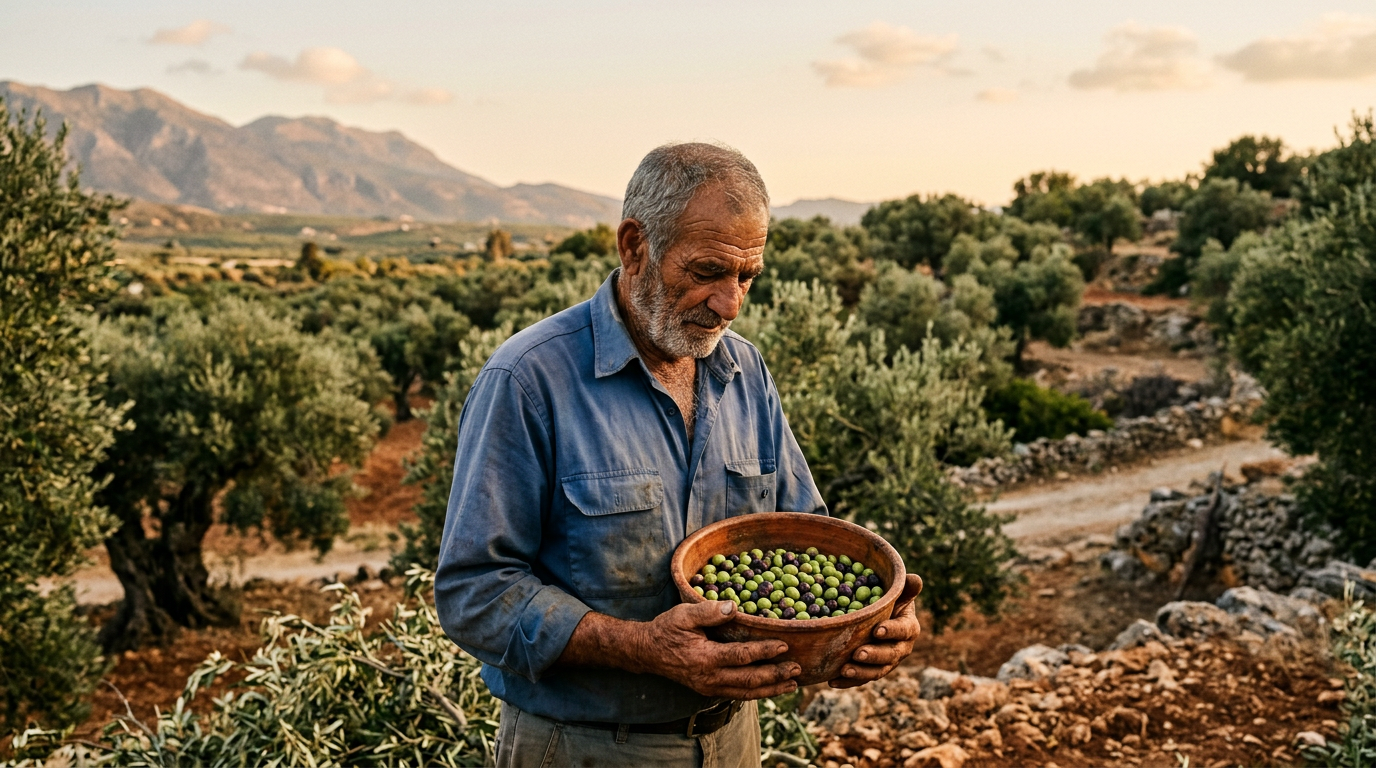
The content of oleocanthal and other polyphenols is largely determined by the harvest time. For oils with the highest polyphenol content, called 'Agouréleo' (green oil) in Greece, the olives are harvested very early—for us in the Messara plain on Crete, this phase begins in mid-October. At this point, the Koroneiki olives are still bright green to slightly violet and packed with protective plant compounds. The downside: the oil yield is significantly lower. You need many more green olives for one liter of oil than with a later harvest in December, when the fruits are black and fully ripe. This decision—quality over quantity—is why polyphenol-rich oils are rarer and more expensive. It's a conscious choice for health value and intense flavor, a choice that many small producers and enthusiasts like us at Olivora make every year. Anyone who secures their own olive tree on Crete receives exactly this green gold from the early harvest.
Polyphenol Content: A Measurable Quality Factor
The concentration of polyphenols in olive oil is not a mystery; it can be precisely measured in a laboratory. The result is given in milligrams per kilogram (mg/kg) and serves as an objective indicator of an oil's quality and expected health benefits. Standard supermarket olive oils often have levels below 150 mg/kg. They taste 'mild' and neutral because they lack the bitter and pungent polyphenols. A good extra virgin olive oil starts at around 150-250 mg/kg.
It gets really interesting from a value of 250 mg/kg. Above this concentration, the European Food Safety Authority (EFSA) permits a health claim: 'Olive oil polyphenols contribute to the protection of blood lipids from oxidative stress.' This applies with a daily intake of 20 grams of such an oil. High-quality, early-harvest oils like ours from Olivora regularly reach values of over 400 mg/kg, and significantly more in particularly good years. For us, this analysis is a moment of truth every autumn.
I remember well a late October evening last year. We were sitting with the Drakakis family in Sivas, south of Heraklion, waiting for the email from the lab. Father Yannis, his hands marked by decades of olive cultivation, was visibly tense. When the message arrived and the value was over 550 mg/kg, a smile spread across his face. It's this confirmation that the hard work, the early harvest despite the lower yield, and the care taken during pressing have all paid off. It's the pride of having created a product that not only tastes good but is also good for you. It is such an exclusive and demonstrably high-quality oil that members of our premium olive oil club receive.
💡 Tip: When buying high-quality olive oil, ask for the analysis values for polyphenol content and the harvest date. Transparent producers are happy to provide this information. A fresh oil from the most recent harvest season is always the best choice.
From Olive to Bottle: How Polyphenols Are Preserved
The journey from the harvest in the grove in the Messara plain to the bottle in your kitchen is a race against time and the three greatest enemies of olive oil: oxygen, light, and heat.
The Crucial Role of Cold Extraction
The term 'cold-pressed' or, more modern and correct, 'cold-extracted' is legally defined. The temperature of the olive paste must not exceed 27 °C during the entire process. Higher temperatures would increase the oil yield, but would also destroy the volatile aromas and, above all, the heat-sensitive polyphenols. Our partner oil mill is therefore designed to work coolly and efficiently to preserve the maximum quality.
Speed is Everything: From Tree to Mill in Under 6 Hours
As soon as an olive is picked from the tree, an irreversible process of oxidation and fermentation begins. If the olives are stored in sacks and left lying around for days, defects develop and the polyphenols break down. For our Olivora oil, the iron rule is: what is harvested in the morning must be in the mill by noon. This immediate processing within a maximum of six hours stops the negative processes and seals in the freshness and valuable compounds in the oil. We go to this effort so that the oil you receive, for example, through an adoption of a Cretan olive tree, is of the highest possible quality.
Filtration and Storage: The Final Steps to the Perfect Oil
After extraction, the oil is cloudy and contains small fruit particles and water. This 'olio nuovo' tastes fantastic but is not shelf-stable, as the particles would settle at the bottom of the tank and begin to ferment. Careful filtration removes these suspended solids, making the oil clear and stable. It is a quality assurance step, not a loss. Subsequent storage in stainless steel tanks, excluding oxygen and light, ensures that the polyphenols are protected until bottling. Once in the bottle, its protection is in your hands. Our guide on 'How to Store Olive Oil Correctly' provides thorough instructions.
Polyphenols in Your Kitchen: More Than Just Salad Dressing
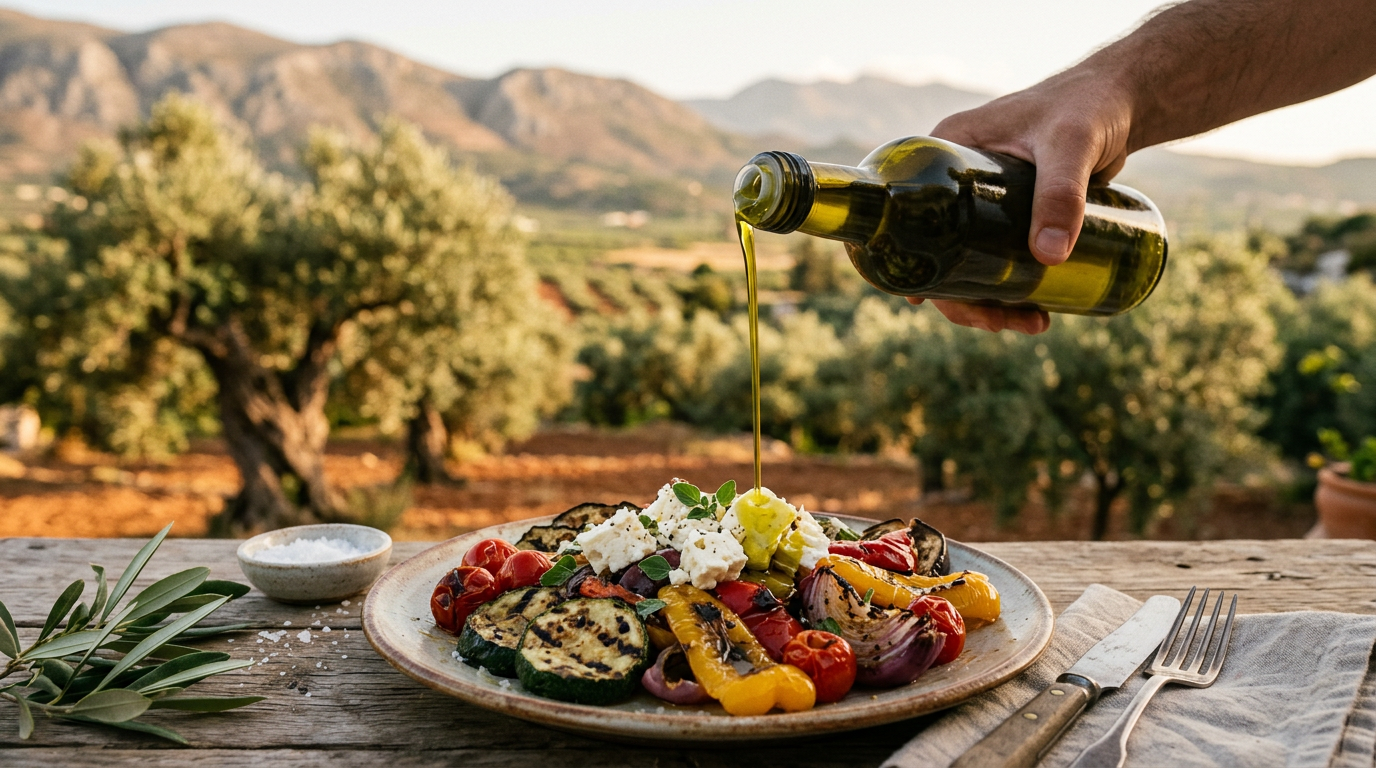
An olive oil with a high polyphenol content is a culinary tool that goes far beyond use in a simple salad dressing. Its robust, bitter, and peppery notes can transform dishes, adding a new dimension of depth and complexity. It is a 'finishing oil,' meant to be drizzled generously over food just before serving to unleash its full aroma. Don't be afraid to use it for cooking as well. The myth that you can't heat olive oil has long been debunked, as you can read in our article on the smoke point of olive oil. Polyphenol-rich oil is actually more stable at high temperatures than many other oils.
Hervorragend passt die intensive Würze zu kräftigen Aromen: über ein gegrilltes Steak, zu einem deftigen Bohneneintopf, über geröstetes Gemüse oder auf einer Bruschetta mit reifen Tomaten und Knoblauch. Die Bitterkeit des Öls harmoniert wunderbar mit bitteren Salaten wie Radicchio oder Chicorée. Probieren Sie es auch einmal als überraschendes Element auf einem Löffel Vanilleeis oder zu einem Stück dunkler Schokolade. Es ist diese Vielseitigkeit, die Köche und Genießer an einem charakterstarken Öl so schätzen. Ein Grund mehr, sich mit einer Olivenbaum-Patenschaft jedes Jahr aufs Neue eine solche kulinarische Freude zu sichern.
💡 Tip: Do a simple tasting to test the quality of your oil. Pour a spoonful of olive oil into a small glass (a wine glass or even a shot glass will work). Warm the glass with your hands to release the aromas, then smell it. Next, slurp the oil with some air. A good, polyphenol-rich oil will have a distinct peppery tickle on the finish. That's the quality sign you should look for.