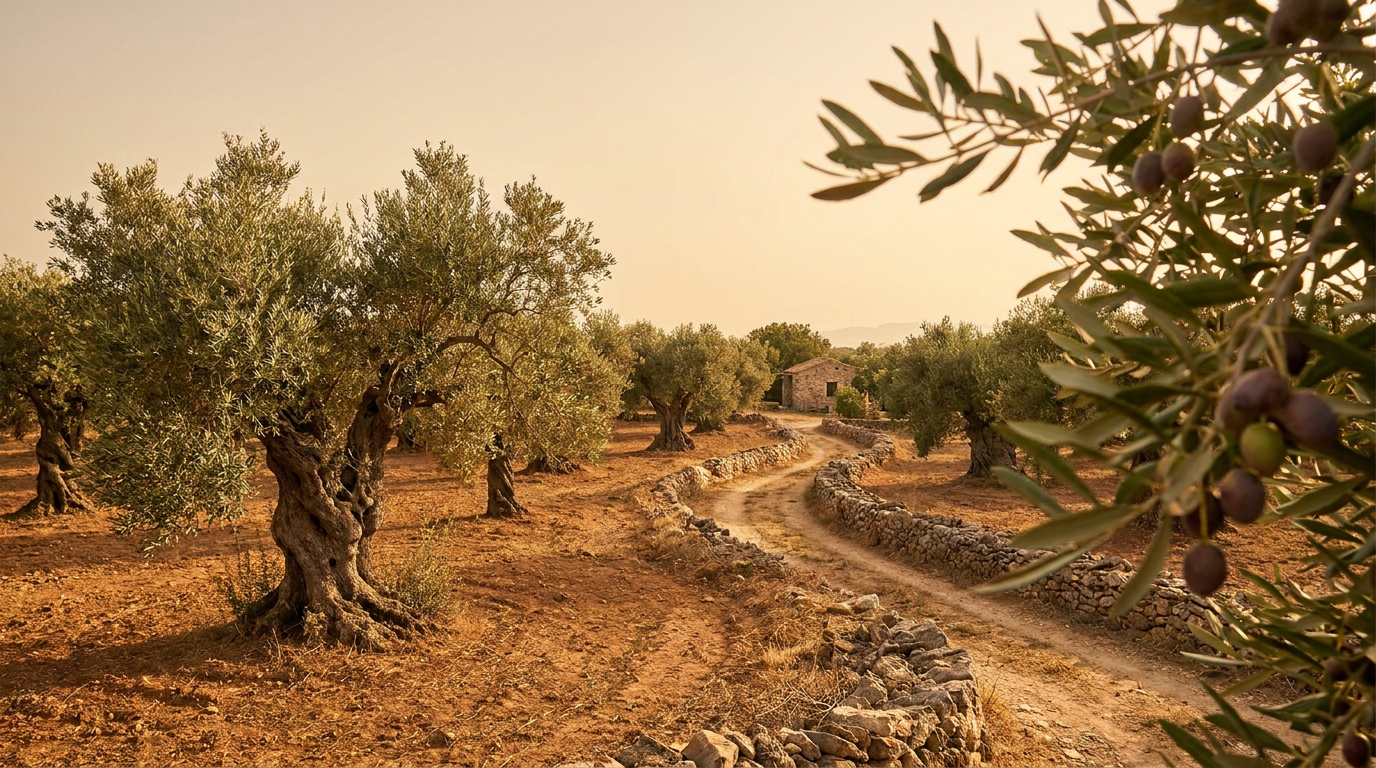
Polyphenols are the valuable, health-promoting antioxidants responsible for the bitter taste and peppery scratch in the throat of a first-class olive oil. Cretan olive oils, especially from the Koroneiki olive, achieve peak polyphenol levels because a unique terroir, an early harvest, and extremely fast, cold processing all work together here.
TL;DR:
- Polyphenols are natural antioxidants in olive oil that provide its bitter taste and pungency.
- The higher the polyphenol content, the greater the health benefits and the better the oil is protected from oxidation.
- The Cretan Koroneiki olive naturally has enormous potential for high polyphenol levels, which is unlocked through early harvesting and rapid processing.
- A value over 500 mg/kg is considered excellent; top Cretan oils like Olivora often exceed 800 mg/kg.
At a glance:
- Definition: Polyphenols are secondary plant compounds that act as antioxidants, protecting the fruit from pests and stress.
- EU Health Claim: From 250 mg/kg of polyphenols, an olive oil can be advertised as beneficial for protecting blood lipids from oxidative stress.
- Sensory profile: You taste them as a bitter note on the tongue and feel them as a peppery tickle (the "kick") in the back of your throat.
- Top Cretan values: Oils from the Koroneiki olive in the Messara plain can reach levels from 800 to over 1,200 mg/kg.
- Key compounds: Oleocanthal (responsible for the pungency), oleacein (the bitterness), and hydroxytyrosol.
- Quality factor: High polyphenol levels are an unmistakable sign of an early harvest, healthy fruit, and masterful processing.
What exactly are polyphenols in olive oil?
You've surely experienced it: you taste a really good, fresh olive oil and suddenly, there's more than just an oily taste in your mouth. It tastes slightly bitter on your tongue, and on the finish, you feel a distinct, almost sharp scratch in your throat. Congratulations, you've just met the polyphenols. Polyphenols are a large group of thousands of secondary plant compounds found in fruits, vegetables, tea—and, of course, olives. For the plant itself, they are a natural defense system against predators, UV radiation, and oxidative stress. For us, they are the reason why real olive oil is not just a fat, but a health elixir.
You can think of them a bit like the tannins in a full-bodied red wine: they provide structure, character, and are a sign of quality and longevity. In olive oil, it's mainly compounds like oleocanthal, oleacein, hydroxytyrosol, and tyrosol that set the tone. Oleocanthal is the rockstar among them—it's responsible for the peppery sensation in the throat that is so characteristic of a high-quality oil. Scientists have found that it has an anti-inflammatory effect similar to ibuprofen, but without the side effects and as a daily pleasure. Oleacein, in turn, contributes the pleasant, complex bitterness. So, if your olive oil has both—bitterness and pungency—it's not a flaw, but the best sensory certificate of quality you can get. Yes, good olive oil can and should be bitter. Anyone who wants to change that is probably better off buying sunflower oil.
These compounds are extremely powerful antioxidants. This means they not only protect the olive on the tree but also the oil in the bottle from going rancid. Most importantly, they protect the cells in your body from the attacks of free radicals, which are partly responsible for aging processes and diseases. A high polyphenol content is therefore a win-win situation: the oil stays fresh longer, and it's better for you. It's nature's way of ensuring preservation and added health value. An oil without polyphenols is ultimately just fat—an oil with polyphenols is a liquid superfood.
Why Cretan olive oils are ahead of the pack
Not all olive oil is created equal when it comes to polyphenols. The concentration can vary dramatically—from under 100 mg/kg in cheap supermarket oils to over 1000 mg/kg in artisanal, top-tier oils. And this is where Crete comes in. The island, especially the Messara Plain in the south, is basically the Silicon Valley for high-polyphenol olive oils. This advantage is no coincidence but the result of a perfect interplay of varietal, soil, climate, and centuries-old tradition.
The most important factor is the olive variety. While Spain and Italy often cultivate varieties bred for mass and yield, Crete is home to the ubiquitous little queen of flavor, the Koroneiki olive. It's small, almost inconspicuous, but it packs a punch. It naturally produces oils with a very high proportion of polyphenols. It's a fighter, perfectly adapted to the dry, barren Cretan terroir, and in response to this "positive stress," it concentrates a particularly high number of protective compounds in its fruit.
The Koroneiki Olive: Crete's little hero
The Koroneiki olive is the heart of Cretan olive cultivation. It accounts for about 60% of the total Greek olive oil production and is famous for its exceptional quality. Its small size means that it has a very large surface area and a large pit relative to its flesh—areas where many polyphenols are formed. Unlike larger, fleshier varieties that contain a lot of water, the juice of the Koroneiki olive is highly concentrated. It may not deliver the highest yield per tree, but what it does deliver is of unparalleled aromatic and health density. Cultivating this variety is a conscious decision for quality over quantity—a philosophy deeply rooted in Cretan agriculture and one we live by at Olivora when planning the harvest for exclusive access to the Olivora grove.
The Terroir of the Messara Plain
If the Koroneiki olive is the star, then the Messara Plain is Crete's treasure trove for olive oil. This high plateau in southern Crete, nestled between the Asterousia Mountains to the south and the Psiloritis Massif to the north, offers the perfect conditions. Over 300 days of sunshine a year, barren limestone soils that force the roots to dig deep, and the dry, hot summers expose the trees to just the right amount of stress to boost polyphenol production. The trees fight for survival, and in doing so, produce more of the protective compounds that make their oil so valuable. It's a paradox: the tougher the conditions for the tree, the better the oil for you. This unique combination of geography and climate creates a microclimate that is reflected in every drop of our olive oil.
The Harvest: A race against time for maximum polyphenols
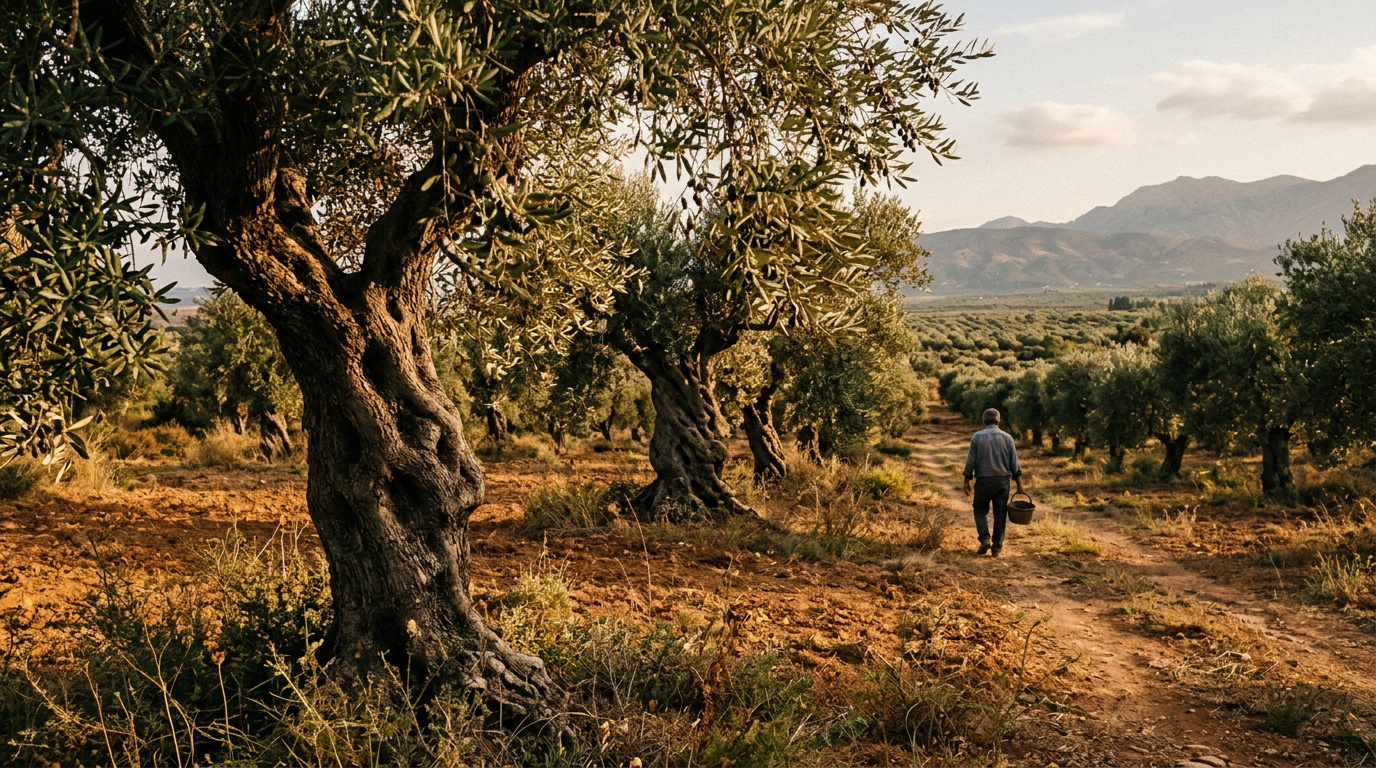
You can have the best olive and the best terroir—but if you make a mistake during the harvest, the entire potential for high polyphenol levels is lost. The timing and method of the harvest are the most critical factors that decide between an average and a world-class olive oil. It's a fine line and a real race against time. The polyphenol content in an olive reaches its peak when the fruit is still green and just beginning to change color (a state called "invaiatura"). From that moment on, as the olive darkens and ripens, the polyphenol content decreases daily, while the oil yield increases.
A commercial producer focused on mass production will therefore wait as long as possible to press the most oil from their olives. The result is a mild, often characterless oil with few polyphenols. A quality fanatic like us at Olivora does the exact opposite: we harvest early. We usually start in mid-to-late October, significantly earlier than many others. Our olives are then still greenish-yellow to slightly purple. This means we consciously sacrifice a portion of the yield to gain the maximum concentration of bitterness, pungency, and, of course, polyphenols. This decision is the core of our philosophy and the reason why an olive tree adoption on Crete guarantees you an oil that is bursting with health.
I remember a day in late October in the grove near Mires. Father Yannis of the Drakakis family looked at the sky, then at an olive in his hand, and said only, "Ochi akoma. I pikráda koimátai." – "Not yet. The bitterness is still sleeping." A week later, when the first oil flowed from the press and made us all cough with its peppery pungency, we knew he had waited for the perfect moment. That's the kind of experience you can't find in any textbook.
💡 Tip: Pay attention to the harvest date, not just the best-before date. Freshness is everything when it comes to polyphenols. An oil from the latest harvest (e.g., Nov. 2025) will still be more potent in June 2026 than an undated supermarket oil. Freshness is the ultimate luxury.
From olive to oil: Why processing is everything
Harvested olives are like a ticking time bomb. The moment they are separated from the tree, an oxidation process begins that breaks down the polyphenols. Every dent, every crack in the olive's skin accelerates this decay. That's why the hours after the harvest are crucial. Our goal is to reduce the time between tree and mill to under six hours. The olives are traditionally combed from the branches by hand with small rakes and fall into nets spread out under the trees. This method is gentle and prevents the fruit from being bruised or falling onto the ground, where they could get dirty and begin to ferment.
Once at the oil mill, the olives are immediately washed and cleared of leaves. Then comes the decisive step: the extraction. To be classified as "extra virgin" and "cold-extracted," the temperature throughout the process must not exceed 27°C. While heat would extract more oil from the olive paste, it would also destroy the volatile aromas and valuable polyphenols. We often stay below 25°C during our pressings. Modern centrifuges then separate the oil from the fruit water and solid parts without excessive contact with oxygen. Oxygen, along with heat and light, is the third major enemy of good olive oil.
This immense effort for speed and cool temperatures is unprofitable for industrial mass production. But for us, it's non-negotiable. It's the only way to bring the full power and all the aroma that the Koroneiki olive has developed under the Cretan sun into the bottle unharmed. Every bottle of Olivora is the result of this uncompromising dedication, which you can taste and feel. When you consider adopting your own olive tree, you are investing in exactly this process and receiving an oil that is as vibrant and potent as possible.
Tasting, measuring, and comparing polyphenols
The beauty of polyphenols is that you can not only detect them in a lab but also taste them directly. A professional olive oil taster, or just you in your kitchen, can assess the quality of an oil quite well using these sensory markers. A sensory guide to identifying extra virgin olive oil can help you with this. Take a small sip (about a tablespoon) and slurp it noisily, allowing it to mix with air and spread throughout your mouth. Pay attention to two things: a present but pleasant bitterness that spreads across the entire tongue. Second, after swallowing, a peppery tingle or even a slight cough reflex in the back of your throat. If you experience both, you have an oil with a high proportion of oleacein (bitter) and oleocanthal (pungent).
The official EU Health Claim
These health benefits are so well-documented that the European Food Safety Authority (EFSA) allows an official "Health Claim." It states that "olive oil polyphenols contribute to the protection of blood lipids from oxidative stress." This sounds technical, but in plain language, it means: they help keep your cholesterol healthy and thus prevent deposits in the arteries. However, this claim may only be used for oils containing at least 250 mg of polyphenols per kilogram of oil. Most supermarket oils fail miserably at this hurdle. Olivora oils, with values often at 800 mg/kg and above, are far beyond this minimum. We are not talking about homeopathy here, but a scientifically proven, effective dose of healthy substances with daily consumption.
Of course, we don't just rely on our taste. Every batch of our harvest is tested in an independent laboratory using HPLC analysis (High-Performance Liquid Chromatography). This procedure separates the individual polyphenol compounds and measures their exact concentration. This gives us and you the certainty that the quality is not only tasted but also objectively proven. This transparency is an important part of our philosophy and a cornerstone for members of our premium olive oil club.
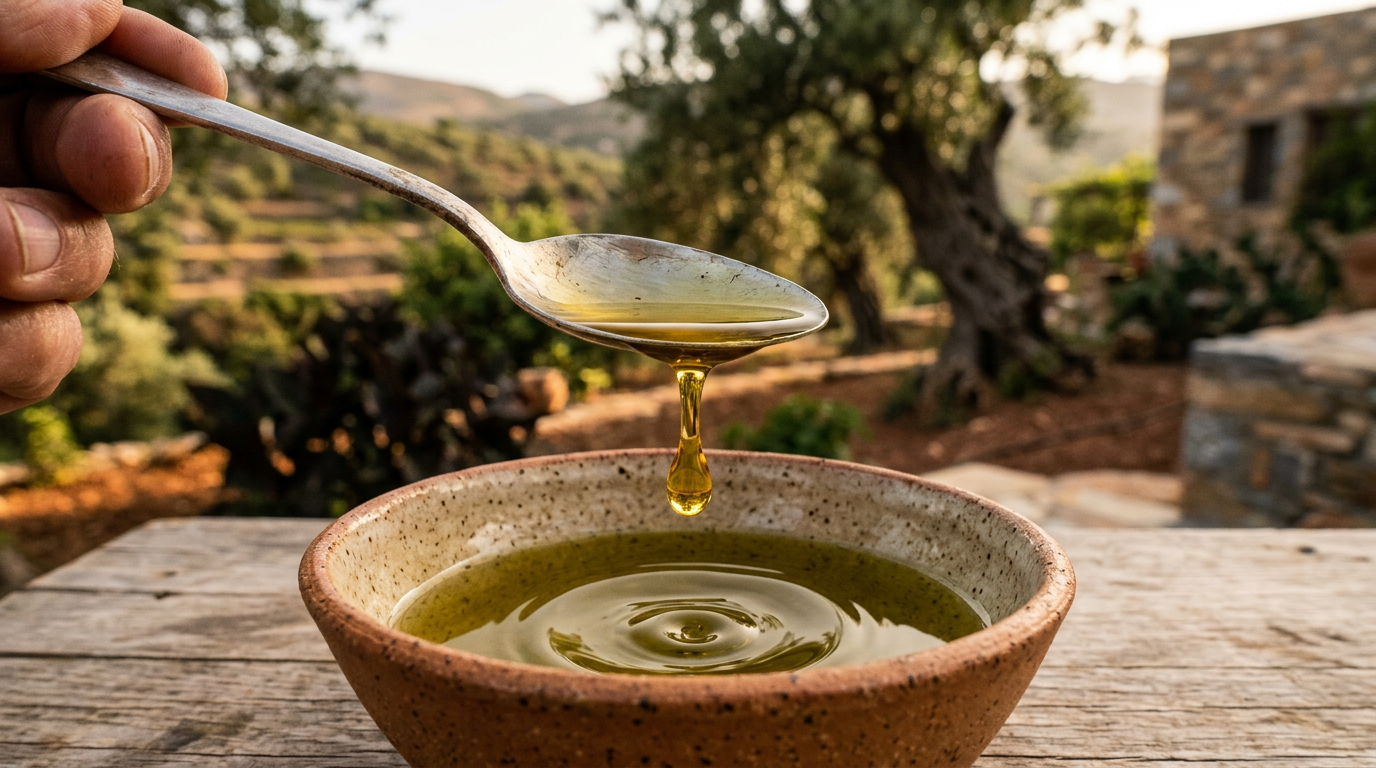
💡 Tip: Store your good olive oil like a vampire—cool, dark, and tightly sealed. Light, air, and heat are the arch-enemies of polyphenols. A good bottle is therefore always dark or in a can, never transparent. You can find more on this in our guide to storing olive oil correctly.
The health benefits: More than just good taste
Why is all this effort for polyphenols so important? Because they have a proven, enormous impact on our health and are a central component of the much-praised Mediterranean diet. It goes far beyond just "good fats." The polyphenols are the bioactive powerhouses that make the difference. Their main effect is their antioxidant power. In our bodies, "free radicals" are constantly being produced through metabolic processes, stress, or environmental toxins. In excess, they lead to "oxidative stress," which damages cells and is linked to a variety of chronic diseases and the aging process. Polyphenols neutralize these free radicals and thus protect our cells.
Another superpower, especially of oleocanthal, is its anti-inflammatory effect. Chronic, low-grade inflammation in the body is considered one of the main causes of many modern diseases, from heart disease and diabetes to neurodegenerative disorders. Regular consumption of high-polyphenol olive oil can help lower these inflammatory markers in the body. The effect of oleocanthal is often compared to a low-dose, daily intake of ibuprofen—but in a natural way and as part of a delicious meal.
The benefits for the cardiovascular system are the most well-researched. As described in the EU Health Claim, polyphenols protect LDL cholesterol ("bad" cholesterol) from oxidation. Oxidized LDL cholesterol is particularly harmful as it can deposit in the artery walls and lead to arteriosclerosis. By inhibiting this process, they directly contribute to the health of our blood vessels. You can find more details on this in our article on olive oil and health. Gifting an adoption of a Cretan olive tree is therefore much more than a beautiful symbol; it is an active contribution to the health of a loved one.
Frequently Asked Questions
What are polyphenols in olive oil? Polyphenols are natural, secondary plant compounds that act as powerful antioxidants. In olive oil, they are responsible for health benefits as well as the bitter taste and peppery scratch in the throat, which is considered a clear mark of quality.
Why does high-polyphenol olive oil tickle the throat? The tickle or "kick" in the throat is mainly caused by the polyphenol oleocanthal. It has strong anti-inflammatory properties similar to those of ibuprofen. This sensation is therefore not a flaw, but proof of a fresh, healthy, and high-quality olive oil.
How many polyphenols should a good olive oil have? A value of 250 mg/kg or more allows for the official EU health claim. Oils with values over 500 mg/kg are considered excellent. Top-tier Cretan oils from the Koroneiki olive, harvested early, often easily reach values of 800 mg/kg and more.
Does cooking destroy polyphenols? Yes, high temperatures partially reduce the polyphenol content. However, olive oil is more stable than often assumed, as our article on the smoke point myth shows. For the full health benefits and flavor, we recommend using the best oil for cold dishes, salads, and for finishing dishes just before serving.
Is bitter olive oil bad or spoiled? No, quite the opposite! Bitterness, along with pungency, is one of the most important sensory characteristics of a fresh, polyphenol-rich olive oil. A mild, almost tasteless oil is often a sign of over-ripeness, industrial filtering, or simply age.
How do Cretan oils compare to Spanish or Italian ones? Every country has excellent oils. However, Crete's strength lies in the dominance of the polyphenol-rich Koroneiki olive, the ideal terroir of the Messara Plain, and the tradition of early harvesting. This leads to a consistently higher average of high-polyphenol oils in the premium segment.
Can I find high-polyphenol olive oil in the supermarket? That is very unlikely. Most supermarket oils are blends optimized for a mild, mass-market taste and a low price. High polyphenol levels are the result of uncompromising, laborious craftsmanship, which you are more likely to find with small producers or through a direct olive tree adoption.