
The perfect combination of olive oil and wine follows a simple principle: harmony in intensity. A light olive oil calls for an equally light wine, while a robust, peppery oil needs a structured, characterful partner so that both complement each other on the palate instead of competing. It's about finding a balance that highlights the aromas of both products and elevates the dish they accompany to a new level.
TL;DR:
- Like with like: Combine light oils with light wines and robust oils with robust wines.
- Structure is everything: Polyphenols in the oil (bitterness, pungency) require a wine with a matching structure (tannins, acidity).
- Regionality wins: The "What grows together, goes together" principle is your surest guide. Cretan oil loves Cretan wine.
- The plate decides: Oil and wine are companions to the dish, not the main stars. The pairing must suit the food.
At a glance:
- Principle: Harmony of intensity (light, medium, robust)
- Structural Analogy: Polyphenols (olive oil) are the tannins (wine).
- Cretan Dream Pair: Koroneiki olive oil with white wines like Assyrtiko or reds like Liatiko.
- Our Oil: Olivora Koroneiki oil, cold-extracted at ≤ 27 °C, acidity < 0.3%.
- Origin: Messara Plain, Southern Crete, Greece.
- Harvest Time: Mid-October to mid-December.
The Principle of Harmony: Pairing Olive Oil and Wine Correctly
Pairing olive oil and wine is less an exact science and more an art based on a central principle: harmony. Imagine a duet. If one singer belts it out powerfully while the other whispers, the melody is lost. The same is true on the palate. A dominant, intensely fruity olive oil with a peppery finish would completely overwhelm a delicate, filigree Riesling. Conversely, a mild, buttery olive oil would simply disappear next to a heavy, tannic Barolo. The goal is always a partnership of equals.
To achieve this harmony, we look at two dimensions: the intensity of the fruit aromas and the structural components. Intensity—from delicately grassy to intensely peppery—is the most obvious part. The structure is more subtle. With wine, we talk about acidity, alcohol, and tannins. With olive oil, it's the polyphenols that provide bitterness and pungency. The analogy is simple and apt: polyphenols are to olive oil what tannins are to wine: the structural backbone. An oil rich in bitter compounds needs a wine that can stand up to it with its own structure, whether through present tannins or vibrant acidity. If this counterweight is missing, the combination seems either limp or aggressive.
A pairing is therefore a conscious decision to find two partners that give each other space to unfold. Sometimes this means finding similarities (delicate & delicate). Sometimes it means creating an exciting contrast where the components balance each other out (robust & structured). But no matter which path you choose, the result should always be an overall impression that is greater than the sum of its parts.
The Three Intensity Levels of Olive Oil as a Guide
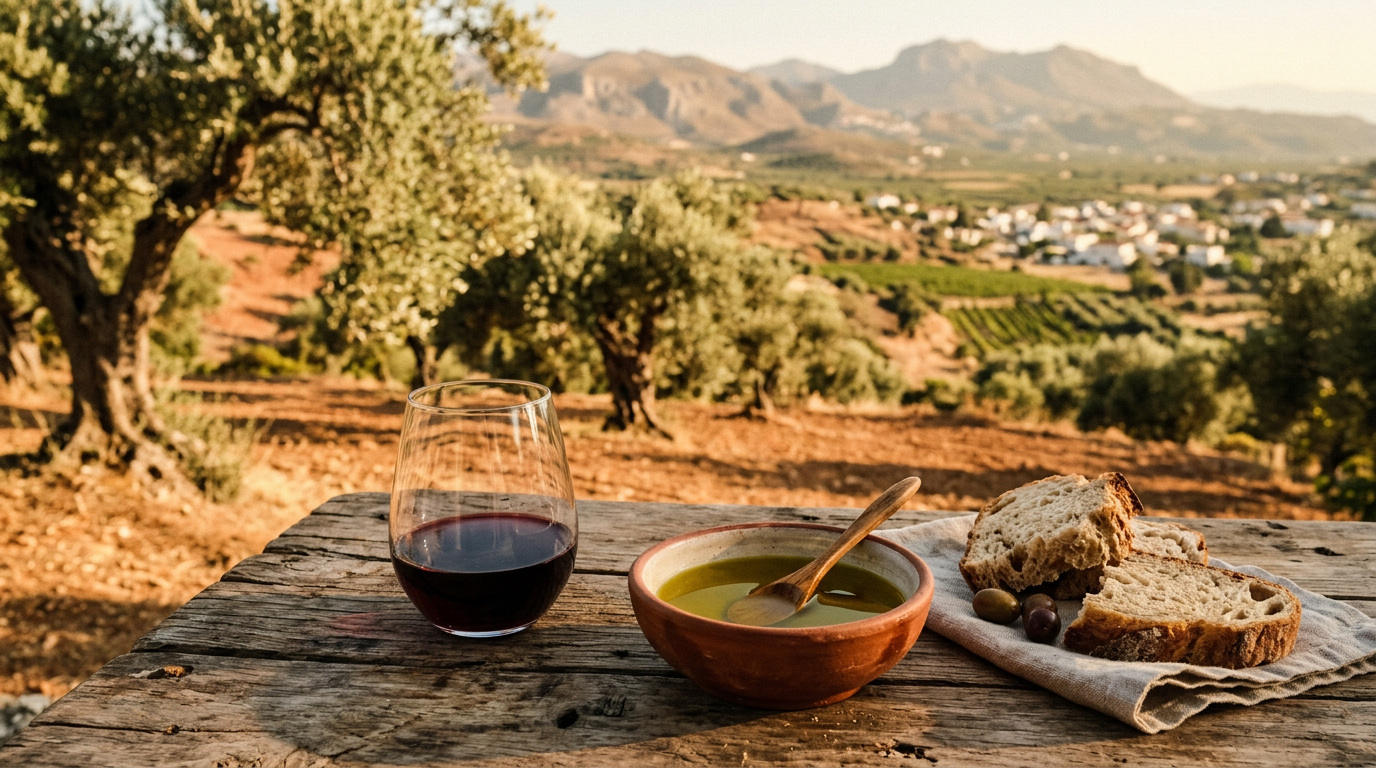
To simplify the search for the right wine, connoisseurs classify olive oils into three basic intensity levels. This categorization is the most reliable compass for any pairing. It describes the force of the aromas and the presence of bitterness and pungency on the palate. Each level has its own characteristics and calls for different wine partners. Recognizing a good extra virgin olive oil and assigning it to its intensity level is the first step to perfect enjoyment.
Lightly Fruity Olive Oils
Lightly fruity oils are the quietest and most delicate of their kind. They often smell of ripe almonds and butter, with only subtle green notes. On the palate, they are soft, almost creamy, and show hardly any bitterness or pungency. They are the perfect companions for dishes whose own flavors should not be masked, such as raw fish (sashimi, ceviche), delicate leafy salads, mild cheese, or steamed vegetables. When choosing a wine, absolute restraint is key. Light, dry white wines without oak influence, like a Pinot Grigio, a Sauvignon Blanc from the Loire, or a Gavi di Gavi, are ideal partners. They bring a fresh acidity that complements the oil's mildness without overwhelming it.
Medium Fruity Olive Oils
This is the world of all-rounders and the home of our Koroneiki olive oil from the Messara Plain. Medium fruity oils are more complex and offer a broader spectrum of aromas: freshly cut grass, green tomatoes, artichoke, and often a peppery finish (the 'tickle in the throat,' a sign of high quality). They are more bitter and pungent than light oils, but still balanced. These oils are incredibly versatile and pair with almost anything, from grilled vegetables and pasta to white meat. The wine partners can also show more character here. More robust white wines like a Chardonnay (without excessive oak), a Greek Assyrtiko, or rosé wines are excellent. For red wines, medium-bodied varieties with moderate tannins, such as a Sangiovese, a Barbera, or—our local favorite—a Kotsifali from Crete, are a good fit.
Intensely Fruity Olive Oils
The powerhouses among olive oils. These oils have intense aromas of green leaves, radicchio, and thistle. On the palate, they are distinctly bitter and pungent—an experience for lovers of characterful oils. They are often made from early-harvested olives and have the highest polyphenol content. Their domain is robust dishes: grilled steak, lamb, bean stews, or aged hard cheeses. Such an oil needs a wine that can not only keep up but also possesses an equal structure. This calls for robust, tannic red wines: a Cabernet Sauvignon, a Syrah, a Nebbiolo (Barolo), or a Greek Agiorgitiko. The tannins of the wine and the polyphenols of the oil form a bond that harmonizes the mouthfeel and tames the respective aromas.
💡 Tip: Conduct a small tasting before deciding on the pairing for an entire meal. Put a little olive oil on a spoon and taste it neat. Then take a sip of wine. Afterwards, try both together with a piece of bread. This way, you can directly feel the interaction and best judge the balance.
"What grows together, goes together": The Regional Approach on Crete
There's an old culinary wisdom that rarely disappoints: 'What grows together, goes together.' This principle is perhaps the simplest and most authentic guide for pairing olive oil and wine. Over centuries, agriculture and food culture have evolved together in a region. The products share the same climate, the same soil (terroir), and the same culinary history. Nowhere is this more evident than in our homeland of Crete.
In the Messara Plain, Crete's treasure trove for olive oil in the south of the island, we cultivate the small, resilient Koroneiki olive. Its oil is typically medium-fruity with notes of green apples and a peppery finish—a direct reflection of the dry, sun-drenched soil near ancient sites like Phaistos. Just a few kilometers from our groves, in the foothills of the Psiloritis mountains, grow autochthonous grape varieties that seem made for this oil. The winemakers around Mires and Sivas press them into wines that carry the same mineral soul.
For our Olivora oil, we therefore almost always recommend a local wine. A crisp, mineral Assyrtiko or an aromatic Vidiano are perfect white wine partners. Their lively acidity cuts through the richness of the oil and highlights its fruity notes. For red wines, Liatiko, one of the world's oldest grape varieties, is a revelation. Its elegant red fruit aromas and soft tannins embrace the peppery pungency of the Koroneiki oil instead of fighting it. If you want to taste authentic Crete, this is the combination. And if you truly want to feel this connection, you can even secure your tree on Crete with us and become part of this tradition.
The Secret Language of Polyphenols and Tannins
A good pairing of olive oil and wine goes beyond mere aromas; it's a dialogue on a molecular level. The main players in this conversation are the polyphenols in olive oil and the tannins in wine. Both are natural compounds responsible for the structure, longevity, and health benefits of their products. And both create a similar sensation in the mouth: astringency, a kind of dry, puckering feeling on the palate.
An olive oil is rich in polyphenols if it tastes bitter and leaves a peppery tickle in the finish. This is not a flaw, but a sign of freshness and quality. This bitterness demands a partner in the wine that can counter it. This is where tannins come in. Tannic red wines (like Cabernet Sauvignon or Syrah) have a similar astringent effect. When you bring them together, something fascinating happens: they soften each other. The proteins in saliva, which both compounds want to bind to, act as a buffer. The result is a rounder, more harmonious mouthfeel. The oil's bitterness seems less aggressive, the wine's tannins softer.
If the wine lacks this structure—as with a light, low-tannin red wine—the force of the polyphenols hits the palate unchecked, making the wine seem watery and bland. Conversely, a very tannic wine can overwhelm an extremely mild, low-polyphenol oil. The art lies in matching the structural intensity. That's why a peppery Tuscan olive oil from Sangiovese olives is so brilliant with a Chianti Classico (also Sangiovese). It's a conversation between equals. For this reason, it's essential to be able to judge the quality of an oil—knowledge we also impart to our olive tree adopters.
Pairing in Practice: Beyond Bread and Salad
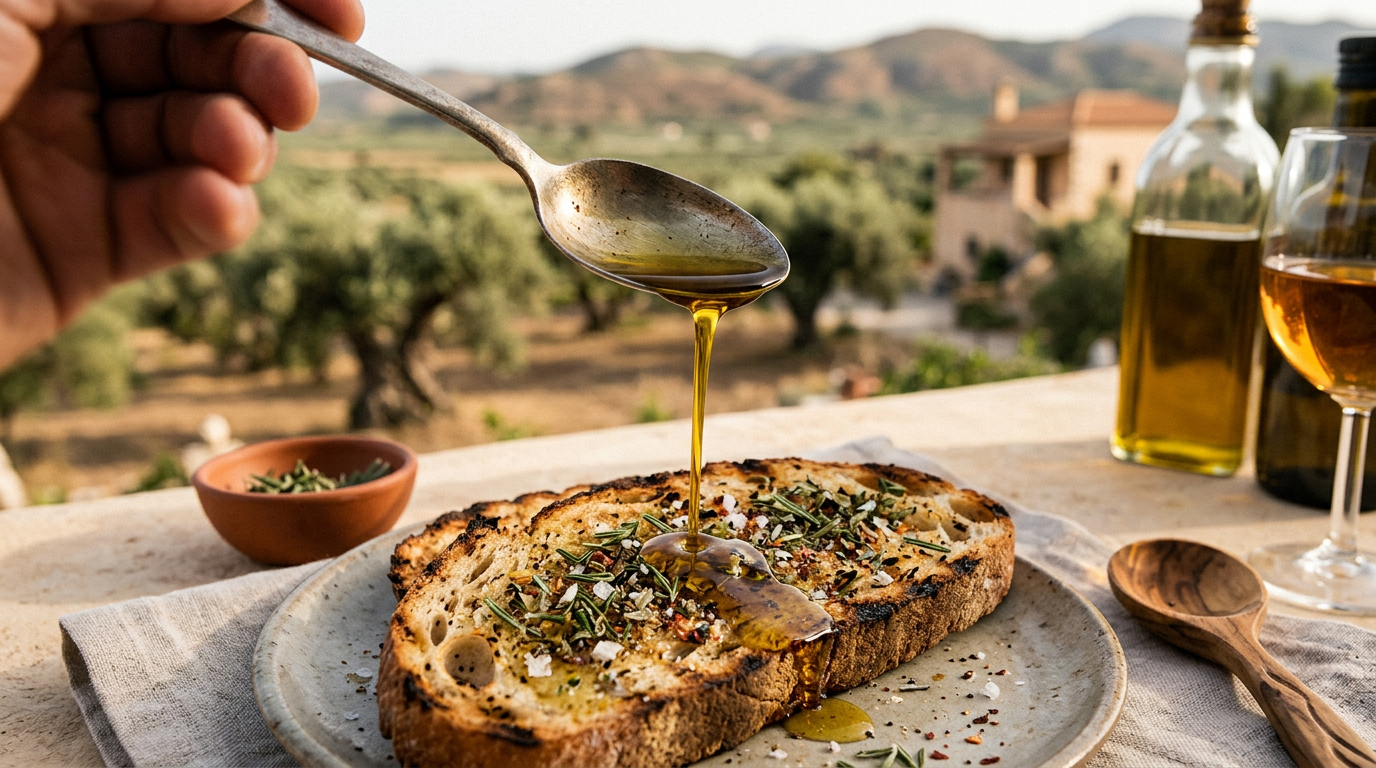
The classic situation for an oil-and-wine pairing is bread drizzled with oil before a meal, accompanied by a glass of wine. But the true potential of this partnership only unfolds in the context of a complete dish. Here, oil and wine act as a team to support and refine the ingredients on the plate. Don't just think of olive oil as a fat for frying, but as a final seasoning you add just before serving.
Imagine a grilled sea bream fillet, seasoned only with salt and lemon. A lightly fruity olive oil underscores the fish's delicacy. A light, mineral white wine like an Assyrtiko from Santorini or Crete picks up the salty notes and provides freshness. Now let's switch to a robust rack of lamb with rosemary from the oven. Here you need a medium to intensely fruity olive oil whose bitter notes can stand up to the strong meat. The right wine? A structured red like a Syrah or a local Kotsifali-Mandilari blend, whose tannins harmonize with the lamb's fat and the oil's polyphenols.
The principle is crucial even with vegetable dishes. Think of our guide to white asparagus & olive oil. The delicate, slightly bitter notes of the asparagus are wonderfully complemented by a medium-fruity oil. Add a Silvaner or a Sauvignon Blanc, and you have a perfect trilogy. And it doesn't always have to be savory. A splash of medium-fruity olive oil over vanilla ice cream with a pinch of sea salt, paired with a glass of Vin Santo or another sweet wine—a combination that surprises many but is addictive. Yes, good olive oil is that versatile. Anyone who uses sunflower oil for everything is missing out. Give it a try—for example, with an oil from our exclusive access to the Olivora grove.
Our Cretan Recommendation: A Personal Anecdote
I remember a late November evening in the grove near Sivas, shortly after the harvest. The air smelled of damp earth and olive paste. Father Yannis Drakakis, the patriarch of our partner family, was sitting on a simple wooden bench in front of his house. Before him, he had a glass of freshly extracted, still cloudy oil—glowing almost neon green. Next to it stood a carafe of simple red village wine and a loaf of bread.
He broke off a piece of bread, dipped it generously into the oil, and took a bite. The oil was so intense it took his breath away—extremely peppery, bitter, full of life. He smiled with satisfaction, took a sip of the wine, and said, 'See? The oil is wild, like a young dog. But this wine here,'—he meant a local Liatiko—'it's like an old friend. He knows the dog and knows how to calm it down.'
That simple moment contained the entire philosophy of pairing. It's not about complicated rules from sommelier books. It's about a deep, innate understanding of the products of one's own land. For Yannis, it's a matter of course that the powerful oil from the early olive harvest on Crete needs a soft, fruity wine that embraces its pungency, not fights it. A lesson that teaches more than any seminar and one we recommend to anyone considering adopting a Cretan olive tree.
💡 Tip: Treat your best olive oil like a fine wine. Store it in a cool, dark place—our guide on how to store olive oil correctly tells you how. At the table, you can pour it into a small carafe. This not only looks elegant but also turns the gesture of pouring into a conscious act of appreciation. An oil like this doesn't belong in the frying pan, but as a finishing touch on the dish.
Frequently Asked Questions
Why is the intensity of the olive oil crucial for wine pairing? The intensity of an olive oil—from mild to robust—sets the flavor 'volume.' The goal is a harmonious balance. A light oil would be overwhelmed by a heavy wine, while an intense oil would dominate a delicate wine. Matching the intensity is the first and most important step.
What role do polyphenols play in pairing? Polyphenols cause the healthy bitterness and pungency in olive oil. They act structurally similar to tannins in wine. A high polyphenol content requires a wine with its own strong structure (tannins or acidity) to create a balanced harmony on the palate instead of a clash of forces.
Should I always choose olive oil and wine from the same region? It's not a must, but it's an excellent rule of thumb. The 'What grows together, goes together' principle works because products from one region often share a similar terroir and a common culinary history. This creates a natural harmony that has developed over centuries, as with our Koroneiki oil and Cretan wines.
Which wines pair well with your Koroneiki olive oil? Our medium-fruity Koroneiki oil from the Messara Plain harmonizes wonderfully with Crete's mineral white wines like Assyrtiko or Vidiano. For red wines, we recommend elegant, fruit-forward varieties like Liatiko or Kotsifali, whose soft tannins perfectly complement the oil's peppery notes.
Can a pairing also ruin the dish? Yes, a bad combination can be disharmonious. A common mistake is to pour a bitter, intense oil over a delicate dish like scallops and pair it with a light wine. The oil and wine would completely overwhelm the delicate flavor of the scallops. The pairing should always support the main star—the food.
Is an olive oil and wine tasting a good gift? Absolutely. A curated selection of a high-quality olive oil and a matching wine is a tasteful gift for any connoisseur. It becomes even more personal and sustainable if you gift an olive tree adoption and include a recommended Cretan wine. With that, you're giving a story and a real connection to the origin.
Can I also pair olive oil with sweet dishes and wine? Yes, that's a fantastic, albeit unconventional, pairing. A medium-fruity olive oil drizzled over vanilla ice cream, a ripe peach, or even a lemon olive oil cake can intensify its flavors. Combined with a glass of noble sweet wine, it creates a complex and unforgettable taste experience that breaks conventions.
<!-- FAQ_SCHEMA:[{"question":"Why is the intensity of the olive oil crucial for wine pairing?","answer":"The intensity of an olive oil—from mild to robust—sets the flavor 'volume.' The goal is a harmonious balance. A light oil would be overwhelmed by a heavy wine, while an intense oil would dominate a delicate wine. Matching the intensity is the first and most important step."},{"question":"What role do polyphenols play in pairing?","answer":"Polyphenols cause the healthy bitterness and pungency in olive oil. They act structurally similar to tannins in wine. A high polyphenol content requires a wine with its own strong structure (tannins or acidity) to create a balanced harmony on the palate instead of a clash of forces."},{"question":"Should I always choose olive oil and wine from the same region?","answer":"It's not a must, but it's an excellent rule of thumb. The 'What grows together, goes together' principle works because products from one region often share a similar terroir and a common culinary history. This creates a natural harmony that has developed over centuries, as with our Koroneiki oil and Cretan wines."},{"question":"Which wines pair well with your Koroneiki olive oil?","answer":"Our medium-fruity Koroneiki oil from the Messara Plain harmonizes wonderfully with Crete's mineral white wines like Assyrtiko or Vidiano. For red wines, we recommend elegant, fruit-forward varieties like Liatiko or Kotsifali, whose soft tannins perfectly complement the oil's peppery notes."},{"answer":"Yes, a bad combination can be disharmonious. A common mistake is to pour a bitter, intense oil over a delicate dish like scallops and pair it with a light wine. The oil and wine would completely overwhelm the delicate flavor of the scallops. The pairing should always support the main star—the food.","question":"Can a pairing also ruin the dish?"},{"answer":"Absolutely. A curated selection of a high-quality olive oil and a matching wine is a tasteful gift for any connoisseur. It becomes even more personal and sustainable if you gift an olive tree adoption and include a recommended Cretan wine. With that, you're giving a story and a real connection to the origin.","question":"Is an olive oil and wine tasting a good gift?"},{"answer":"Yes, that's a fantastic, albeit unconventional, pairing. A medium-fruity olive oil drizzled over vanilla ice cream, a ripe peach, or even a lemon olive oil cake can intensify its flavors. Combined with a glass of noble sweet wine, it creates a complex and unforgettable taste experience that breaks conventions.","question":"Can I also pair olive oil with sweet dishes and wine?"}] -->