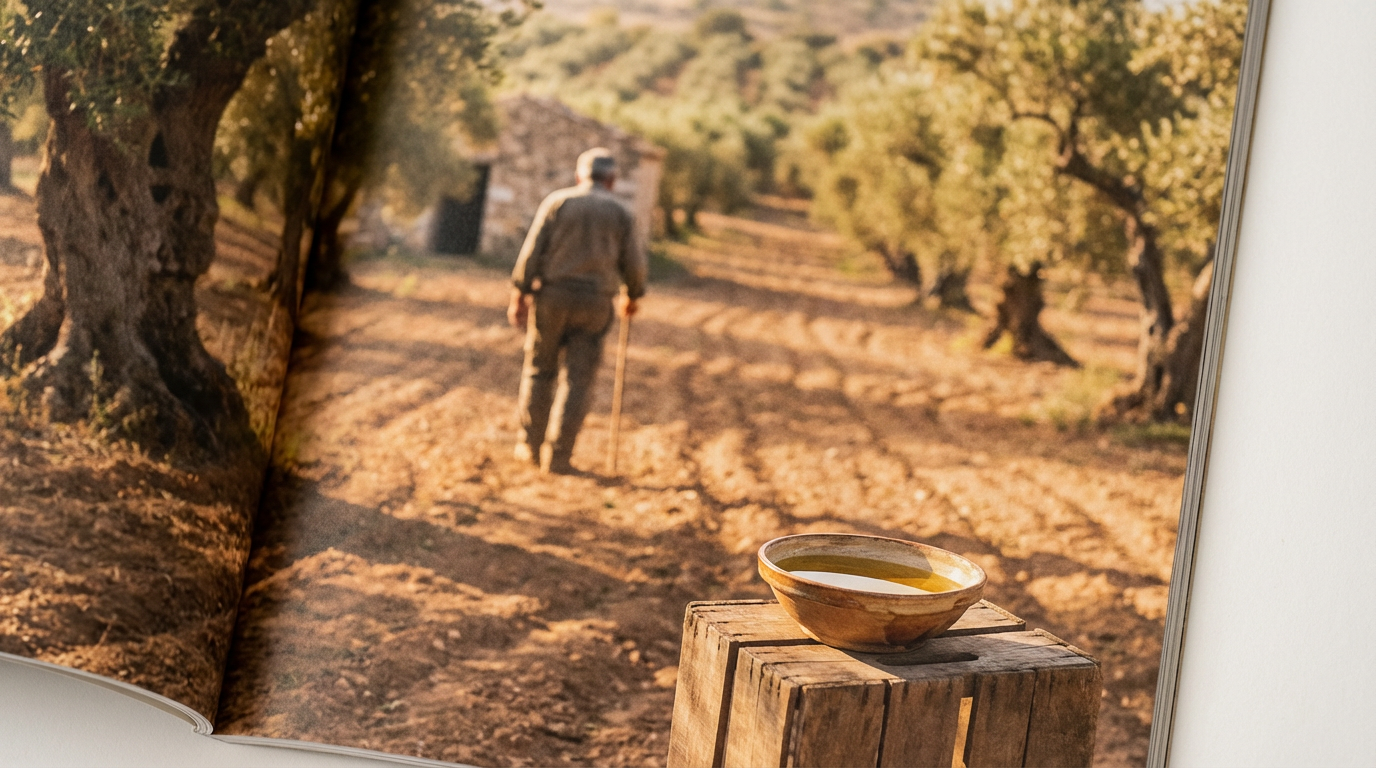
Good olive oil belongs in a hot pan. Contrary to a widespread myth, high-quality extra virgin olive oil is not only suitable for finishing cold dishes, but is also an excellent and healthy choice for frying, baking, and even deep-frying. The deciding factor isn't the smoke point alone, but oxidative stability, where first-class olive oil surpasses most vegetable oils.
TL;DR:
- Yes, you can and should fry with extra virgin olive oil. It's more stable and healthier than many alternatives.
- The smoke point as a sole indicator is misleading. An oil's oxidative stability is more important.
- High-quality olive oil (EVOO) is rich in heat-stable monounsaturated fatty acids and protective polyphenols.
- For everyday frying over medium heat (up to 180 °C), EVOO is ideal. The pan should never be smoking.
At a glance:
- EVOO smoke point: approx. 190–210 °C, depending on the free fatty acid content.
- Recommended frying temperature: 160–180 °C, safely below the smoke point of good olive oil.
- Olivora acidity: < 0.3%, an indicator of high quality and a higher smoke point.
- Main fatty acid: Oleic acid (Omega-9), a heat-stable monounsaturated fatty acid.
- Stability boosters: Polyphenols (antioxidants) protect the oil from oxidation when heated.
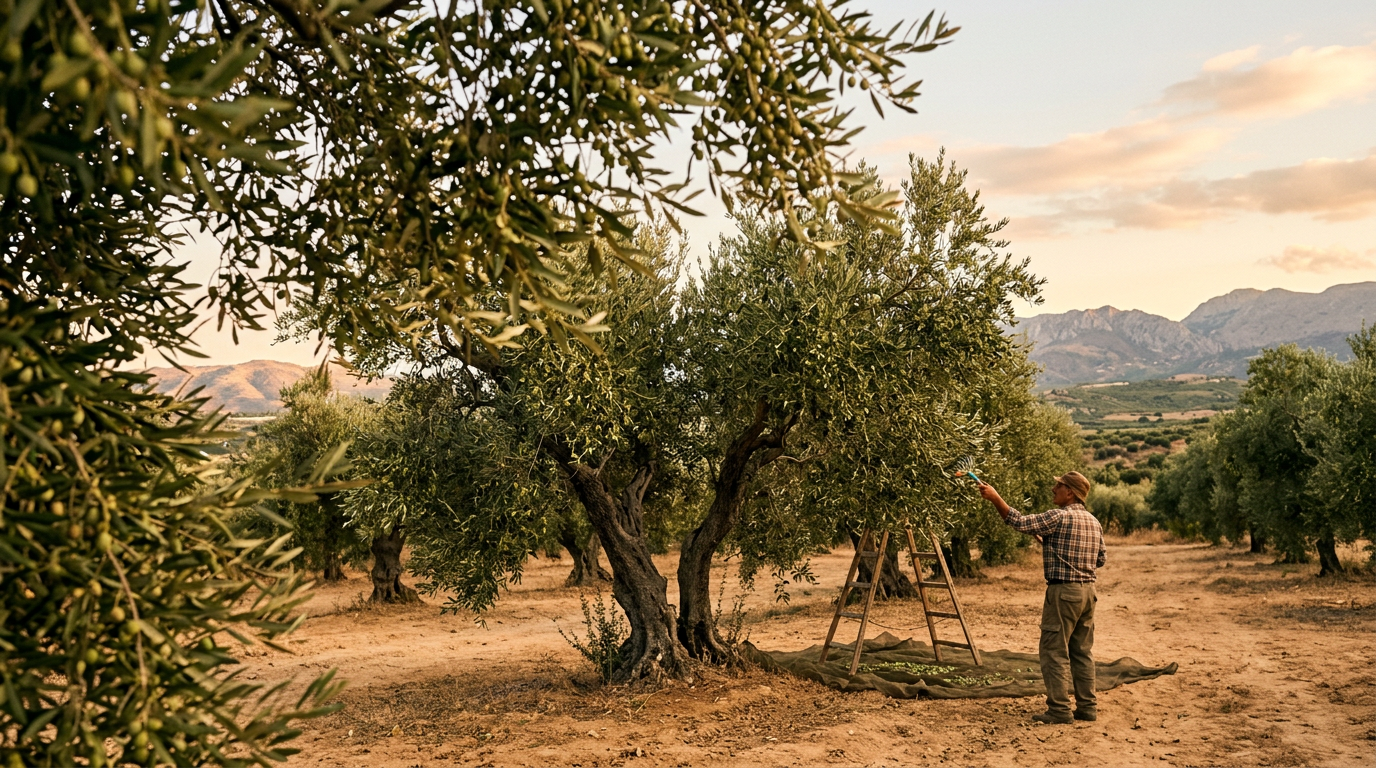
- Origin: Our Koroneiki oil comes from the Messara plain on Crete, hand-harvested and cold-extracted.
Frying with Olive Oil: Why the Answer is "Yes, Absolutely"
The question of whether you can use olive oil for frying regularly sparks heated debates in kitchens and online forums. The answer is a clear yes. A high-quality extra virgin olive oil is one of the best choices for the hot kitchen, for reasons that go far beyond the often misinterpreted smoke point. The Mediterranean kitchen, from the hills of Crete to the coasts of Spain, has practiced this for millennia—not for lack of alternatives, but out of conviction. The secret lies in the oil's chemical composition, which makes it naturally resistant to heat.
The crucial property is oxidative stability. Oxidative stability is an oil's resistance to breaking down under heat and oxygen, because protective compounds like polyphenols prevent the formation of harmful free radicals. Unlike polyunsaturated fats, which are dominant in many common vegetable oils like sunflower or safflower oil, olive oil consists mainly of oleic acid. This monounsaturated fatty acid is chemically far less reactive and therefore more robust at high temperatures. A good olive oil is thus not just a carrier of flavor, but also a functional partner in the kitchen.
When we at Olivora harvest our Koroneiki olives in the Messara plain, we do so at an early stage when the polyphenol content is at its highest. These antioxidants not only protect the olive on the tree and our health in the body, but also the oil in the pan. They act like a natural shield, keeping the oil structure stable even at temperatures up to 180 °C. So, if you choose a high-quality oil, you're not just investing in flavor, but also in the safe and healthy preparation of your food. You could say that anyone who wants to do it differently just buys sunflower oil.
The Smoke Point Myth: What That Number Really Does (and Doesn't) Tell You
The smoke point is the temperature at which an oil begins to visibly smoke and break down. This value is often cited as the most important criterion for a frying oil's suitability—a fallacy. The smoke point alone is a very superficial metric because it says nothing about how quickly an oil forms harmful compounds below this threshold. An oil can have a high smoke point but still oxidize and release unhealthy aldehydes at moderate temperatures. This is often the case with highly refined vegetable oils, which have had their free fatty acids removed through chemical processes (which raises the smoke point), but have also been stripped of all valuable, protective plant compounds like polyphenols.
With extra virgin olive oil, the situation is different. The smoke point typically lies between 190 °C and 210 °C, depending on the quality, variety, and harvest time. This is well above the temperature required for most everyday cooking methods. Sautéing, searing meat, or tossing vegetables happens in a range of 160 °C to 180 °C. So you remain safely below the critical threshold. Anyone who lets their pan get so hot that it's constantly smoking isn't just burning the oil, but the food as well. The problem then isn't the type of oil, but the method.
Free Fatty Acids: The True Indicator of Quality
What actually has a major influence on the smoke point is the content of free fatty acids (FFA). Free fatty acids are a quality marker for olive oil because a low value indicates that healthy olives were processed quickly and gently. A high FFA value (> 0.8%) is a sign of damaged, overripe, or poorly processed fruit and leads to a lower smoke point. A first-class extra virgin olive oil like ours from Olivora, with an acidity level below 0.3%, naturally has a higher smoke point. A low acidity level is therefore not only a guarantee of better taste and longer shelf life—it also makes the oil a more reliable partner in the kitchen. You can learn more about these characteristics in our guide on how to recognize extra virgin olive oil.
Oxidative Stability: The Invisible Superpower of Good Olive Oil
When we talk about the heat suitability of cooking oils, oxidative stability is the real hero of the story. This property describes how well an oil can defend itself against the chemical reaction with oxygen, which is massively accelerated by heat. An oil that oxidizes quickly forms potentially harmful by-products like polar compounds and aldehydes. A groundbreaking 2018 study (Applied Science) investigated exactly this. Researchers heated ten common cooking oils and found that extra virgin olive oil was the most stable of all. It produced significantly fewer harmful compounds even at high temperatures than sunflower, canola, and even coconut oil.
Olive oil owes this remarkable stability to two main components: its fatty acid composition and its antioxidant content. Olive oil is over 70% oleic acid, a monounsaturated omega-9 fatty acid. Its molecular structure has only one double bond, making it far less susceptible to attack by oxygen than the polyunsaturated fatty acids that dominate many nut and seed oils. You can think of these double bonds as small cracks in a suit of armor—the more there are, the more vulnerable the structure.
Polyphenols and Oleic Acid: The Shield in the Bottle
The second line of defense is the polyphenols. Polyphenols are to olive oil what tannins are to wine: they provide structure, protect against spoilage, and contribute significantly to the characteristic flavor. These bioactive plant compounds, responsible for the peppery kick and bitter notes in a fresh oil, are powerful antioxidants. When heated, they essentially sacrifice themselves to protect the valuable fatty acids. The higher the polyphenol content, the better the oil is protected from oxidation. Our Koroneiki olive, the queen of Greek olive varieties, is famous for its high polyphenol content, which reaches its peak during an early harvest in October. So when you taste a bitter, robust oil, you are literally tasting its self-protection mechanism.
💡 Tip: If you have the choice, use a young, robust olive oil from the current harvest for frying. It generally has the highest polyphenol content and thus the greatest protective effect. Older, already mild oils have lost some of these antioxidants and should rather be used for cold dishes.
From the Pan to the Fryer: How to Use Olive Oil Correctly
The theory is convincing, but practice is what counts. The good news: using extra virgin olive oil in the hot kitchen is straightforward. It's about choosing the right temperature for the respective cooking method and using a high-quality product. An everyday EVOO from the Cretan olive oil in the shop is an excellent choice for this.
-
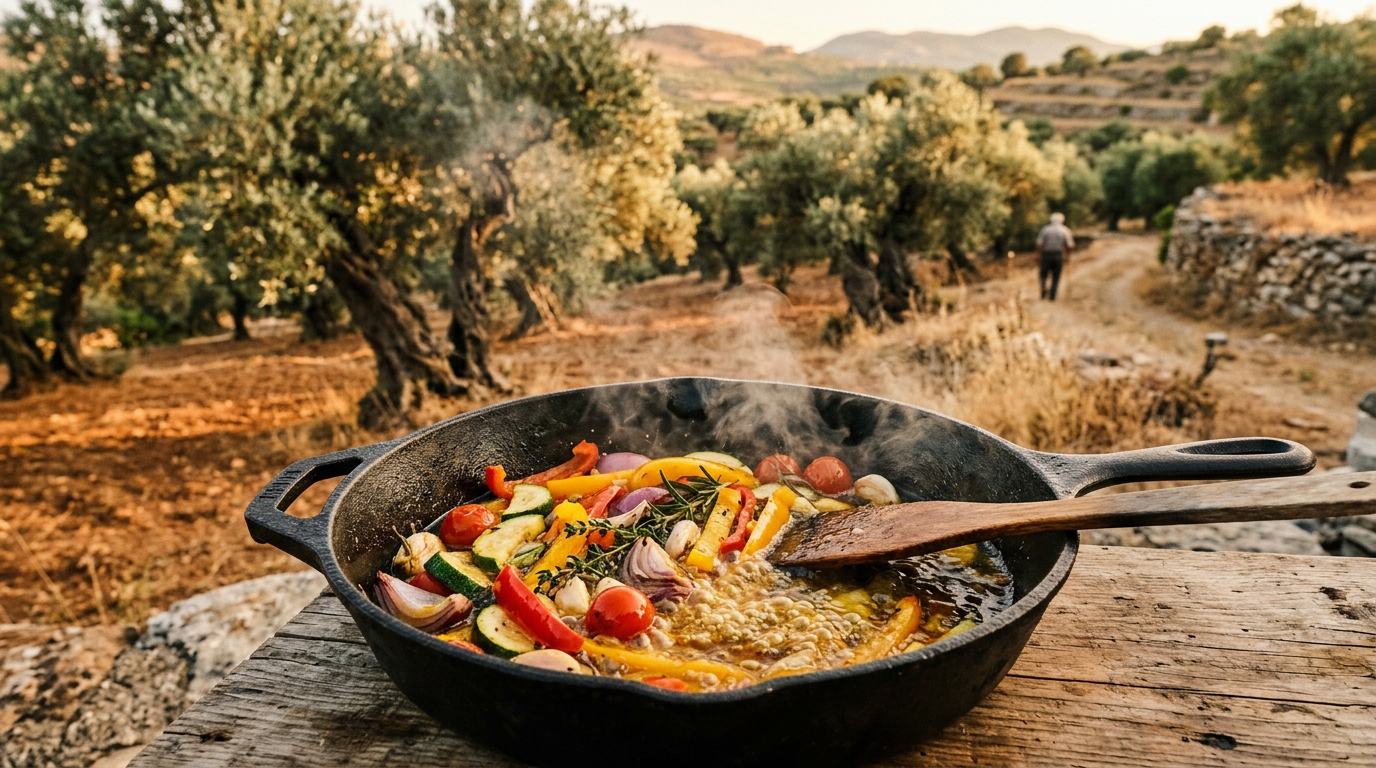
Sautéing and pan-frying (160–180 °C): This is the ideal application. Whether you're sweating onions, searing a chicken breast, or tossing vegetables in a pan, this temperature is perfect for developing roasted aromas without overheating the oil. It gives dishes a fruity depth that other oils can't offer. It's particularly good with green vegetables in the spring. Why not try our recipes for white asparagus & olive oil as an alternative to heavy hollandaise sauce.
-
Baking: Olive oil is a fantastic substitute for butter in many baked goods. It provides a moist texture and a fine, fruity note. Its flavor is particularly excellent in cakes, muffins, or even bread. Our Cretan lemon olive oil cake is a prime example of how wonderfully this combination works.
-
Deep-frying (180–190 °C): Yes, this is also possible and common practice in Mediterranean countries. Since the smoke point of good EVOO is around 200 °C, you can safely deep-fry at 190 °C. It's important to control the temperature with a thermometer. Admittedly, it's a costly method for large quantities. But for small portions, like tapas or fried vegetables, the flavor and health benefits are worth it. The oil can even be filtered and reused after cooling, as it is so stable.
💡 Tip: To check the oil's temperature without a thermometer, stick a wooden spoon handle into the pan. If tiny, steadily rising bubbles form around it, the oil has reached about 170–180 °C and is ready for frying. If it sizzles violently and splatters, it's already too hot.
The Cretan Kitchen as Proof: Insights from the Messara Plain
The best proof of olive oil's suitability for the hot kitchen isn't a laboratory, but daily life on Crete. In the Messara plain, the treasure trove of our Olivora oil, the celebrated oil is not a luxury item, but the fundamental food staple. Here, between the ancient ruins of Phaistos and the Dikti mountains, no one would dream of using a different fat for cooking. The knowledge of the oil's quality and use is passed down from generation to generation, refined by centuries of practice.
I vividly remember an afternoon in November with our partners, the Drakakis family in Sivas. As we were taking freshly harvested olives to the mill, I asked the father, Yannis, if he used different oils for different dishes. He laughed heartily, held a bottle of the freshly pressed, bright green Koroneiki oil up to the sunlight and said, “For my family, there is only this oil. Whether for the salad, for the leg of lamb from the oven, or for the keftedes in the pan—it's always the same. Anything else would be a compromise.” This anecdote reveals a deep-rooted truth: Quality isn't a luxury for special occasions, but the standard for every day. This is the principle our partners live by, and it is the soul of Olivora. You can learn more about our philosophy and partners on our About Us page.
Quality Isn't a Luxury, It's the Standard
On Crete, olive oil is not used sparingly, but generously. Vegetable dishes like "Chorta" (wild greens) or "Briam" (a type of baked ratatouille) practically swim in olive oil, which releases its full aroma into the ingredients during the cooking process. Meat is marinated in it before grilling or frying, and even fried pastries ("Kalitsounia") are traditionally cooked in olive oil. This centuries-old culinary tradition is living proof of the oil's stability and versatility. If it quickly became unhealthy or unpalatable with heat, the world's most successful and healthiest way of eating, the Mediterranean diet, could never have developed on this foundation.
Which Olive Oil for Which Purpose? A Buyer's Guide
The realization that olive oil is heat-stable raises a new question: does it always have to be the most expensive premium oil? The answer is nuanced. You can divide olive oils into two broad categories for kitchen use: the reliable everyday oil and the exquisite finishing oil. Both have their place.
For daily cooking, frying, and baking, you need an honest, well-made extra virgin olive oil. It should be fresh, have a low acidity, and taste clean. It doesn't have to be the most complex oil with extreme polyphenol levels, but it must be flawless and stable. Such an oil offers all the benefits of heat stability and gives your food a wonderful aroma. A great gift for home cooks is to ensure they have access to such an oil—for example, by letting them adopt their own olive tree.
On the other hand, there are the premium oils, often from single estates, special varieties, or very early harvests. Our offer to secure the limited annual harvest falls into this category. These oils are characterized by a particularly complex flavor profile—from freshly cut grass to green tomatoes to artichoke and a peppery finish. These volatile aromas are what make these oils so special. Exposing them to high heat while cooking wouldn't be a sin, but it would be a waste. They show their true greatness when drizzled over a dish just before serving: over a soup, a steak, grilled fish, or simply on a piece of good bread. Anyone who becomes a patron of a Cretan olive tree secures just such an oil for fine dining each year.
Ultimately, the choice of the right oil is a matter of respect for the product and the dish. A good everyday EVOO is the workhorse in the kitchen, because its robust structure and fruity aroma are universally applicable. The premium oil is the soloist that gets the applause at the end. Both are indispensable for a discerning kitchen.
Frequently Asked Questions
Can I really deep-fry with extra virgin olive oil? Yes, it's safe and common practice in Mediterranean countries. The smoke point of high-quality EVOO is around 190-210°C, while the ideal deep-frying temperature is 180-190°C. Thanks to its high oxidative stability, it's even more stable than many other oils and can be reused after filtering.
Does olive oil lose its healthy components when heated? Some of the volatile aromas and polyphenols are lost during heating; that's unavoidable. However, the healthy fatty acid structure (oleic acid) remains stable. Compared to other oils, EVOO retains a higher proportion of protective compounds even after heating. But you get the full health benefits from raw use.
How can I recognize a heat-stable olive oil when I'm shopping? Read the label. Look for "extra virgin," a low acidity level (ideally < 0.5%), the harvest date (the fresher, the better), and a dark bottle to protect from light. High quality, as guaranteed by an olive tree adoption, is the best indicator of stability.
Is refined olive oil better for frying? Refined olive oil has a higher smoke point, but that's deceptive. During refining, the oil is stripped of all its healthy polyphenols and flavors. It's a dead, tasteless fat that, despite its high smoke point, can form unhealthy compounds more quickly when heated than a good extra virgin olive oil.
Which Olivora olive oil is best for cooking? For daily cooking and frying, we recommend our classic Olivora extra virgin olive oil from the shop. It's an excellent all-rounder. The exclusive oil for members of our Harvest Club is a premium finishing oil whose complex aromas are best enjoyed raw or for refining just before serving.
Can I reuse olive oil from the pan? Yes, high-quality extra virgin olive oil can be reused after pan-frying or even deep-frying. Let the oil cool, filter it through a fine sieve or coffee filter to remove food particles, and store it in a sealed container. However, it should not be reused indefinitely.
Does frying with olive oil make food greasy? No, at the right temperature, the opposite happens. When the oil is hot enough (approx. 170-180°C), it immediately seals the surface of the food. A crust forms, preventing excessive fat from penetrating. The food becomes crispy on the outside and remains juicy on the inside.
<!-- FAQ_SCHEMA:[{"answer":"Yes, it's safe and common practice in Mediterranean countries. The smoke point of high-quality EVOO is around 190-210°C, while the ideal deep-frying temperature is 180-190°C. Thanks to its high oxidative stability, it's even more stable than many other oils and can be reused after filtering.","question":"Can I really deep-fry with extra virgin olive oil?"},{"answer":"Some of the volatile aromas and polyphenols are lost during heating; that's unavoidable. However, the healthy fatty acid structure (oleic acid) remains stable. Compared to other oils, EVOO retains a higher proportion of protective compounds even after heating. But you get the full health benefits from raw use.","question":"Does olive oil lose its healthy components when heated?"},{"answer":"Read the label. Look for \"extra virgin,\" a low acidity level (ideally < 0.5%), the harvest date (the fresher, the better), and a dark bottle. High quality, as guaranteed by an olive tree adoption, is the best indicator of stability.","question":"How can I recognize a heat-stable olive oil when I'm shopping?"},{"answer":"Refined olive oil has a higher smoke point, but that's deceptive. During refining, the oil is stripped of all its healthy polyphenols and flavors. It's a dead, tasteless fat that, despite its high smoke point, can form unhealthy compounds more quickly when heated than a good extra virgin olive oil.","question":"Is refined olive oil better for frying?"},{"answer":"For daily cooking and frying, we recommend our classic Olivora extra virgin olive oil from the shop. It's an excellent all-rounder. The exclusive oil for members of our Harvest Club is a premium finishing oil whose complex aromas are best enjoyed raw or for refining.","question":"Which Olivora olive oil is best for cooking?"},{"answer":"Yes, high-quality extra virgin olive oil can be reused after pan-frying or even deep-frying. Let the oil cool, filter it through a fine sieve or coffee filter to remove food particles, and store it in a sealed container.","question":"Can I reuse olive oil from the pan?"},{"answer":"No, at the right temperature, the opposite happens. When the oil is hot enough (approx. 170-180°C), it immediately seals the surface of the food. A crust forms, preventing excessive fat from penetrating. The food becomes crispy on the outside and remains juicy on the inside.","question":"Does frying with olive oil make food greasy?"}] -->