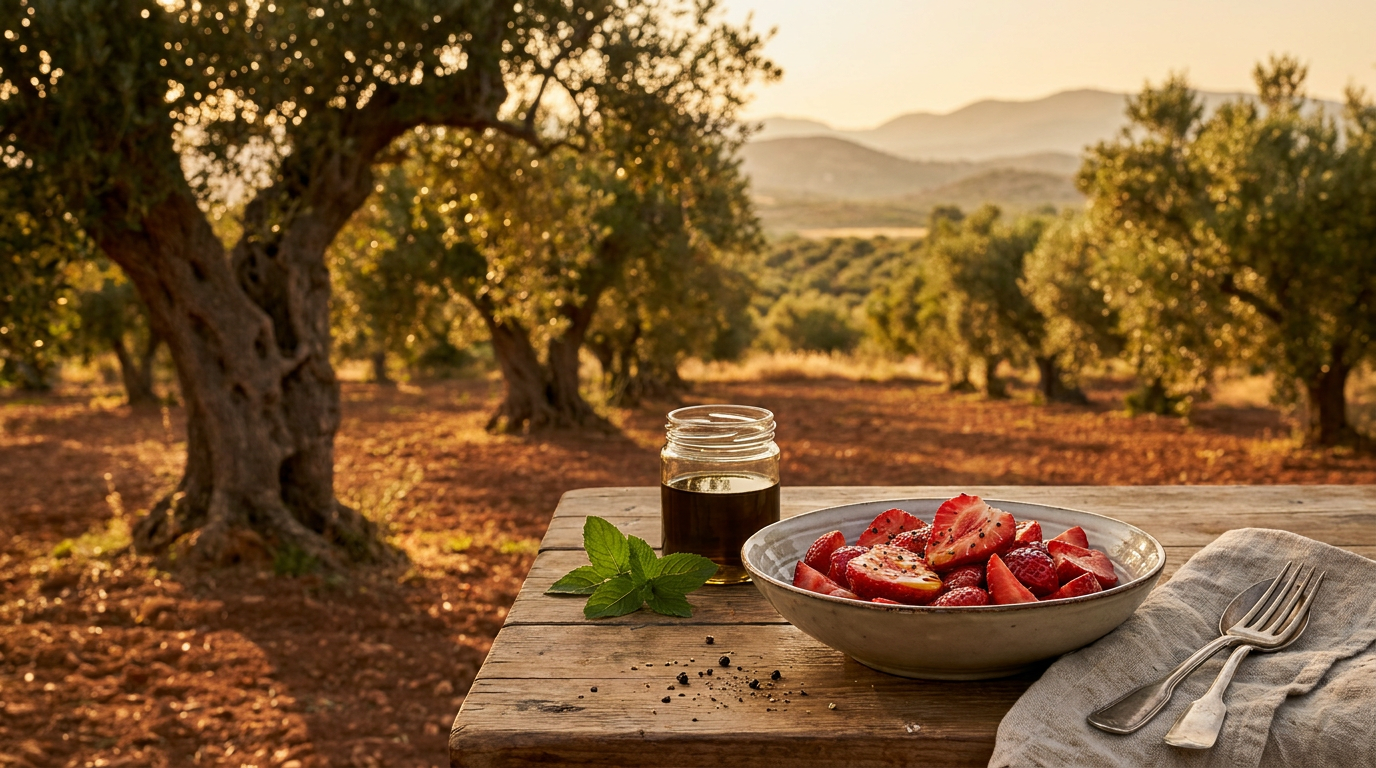
Strawberries with olive oil and freshly ground pepper is a combination that becomes addictive because it's based on the principle of harmonious contrasts. The fruity, slightly bitter olive oil and the piquant heat of the pepper highlight the natural sweetness of the strawberries, lending the simple fruit an unexpected complexity and depth. It's a dessert that proves how just three high-quality ingredients can create an unforgettable taste experience.
TL;DR:
- Sweet strawberries, fruity olive oil, and sharp pepper create a surprising yet harmonious depth of flavor.
- The quality of the olive oil is crucial; a peppery, extra virgin oil like our Koroneiki oil is ideal.
- Preparation takes less than 5 minutes and requires no cooking skills—just the courage to combine.
- The dish works because the fat in the oil acts as a flavor carrier and the heat from the pepper stimulates the sweet receptors.
At a glance:
- Dish: Strawberries with Olive Oil & Black Pepper
- Preparation time: 5 minutes
- Best month: May & June, during the peak strawberry harvest season
- Ideal olive oil variety: Koroneiki olive (fruity, peppery, slightly bitter)
- Recommended acidity (oil): < 0.3% (extra virgin)
- Origin of our oil: Messara Plain, Southern Crete
Why Strawberries with Olive Oil and Pepper Are a Revelation
At first glance, the idea of combining sweet, juicy strawberries with oily, peppery olive oil might seem strange. But behind it lies a culinary principle that star chefs and food enthusiasts have long used: the art of "flavor pairing," the deliberate combination of contrasts. This trio is a perfect example of how opposites not only attract but elevate each other to new heights. The fat in olive oil is an excellent flavor carrier. It coats the tongue, allowing the fruity aromas of the strawberry to unfold more slowly and intensely. At the same time, an excellent olive oil brings its own notes—hints of freshly cut grass, artichoke, and, crucially, a peppery sharpness on the finish. This sharpness comes from the valuable polyphenols in olive oil, which are not only healthy but also provide character.
Freshly ground black pepper adds another dimension. Its heat, caused by the compound piperine, creates a slight warming sensation in the mouth. This sensation, in turn, makes the sweetness of the strawberries appear even more present and vibrant. It's a fascinating interplay: the sweetness of the berry is not masked by the bitterness of the oil and the heat of the pepper, but framed and intensified. The result is a dessert that is simultaneously sweet, fruity, savory, spicy, and creamy—a small explosion on the palate. The combination is a definitive example of complexity in minimalism: with just three ingredients, you create a spectrum of flavors that other recipes need a whole list of ingredients for. It's no coincidence that this pairing is so popular in modern Mediterranean cuisine; it honors the quality of the individual products and combines them into something new and exciting.
Choosing the Right Olive Oil: More Than Just Fat
Let's be honest: this dessert won't work with a cheap, bland olive oil from the supermarket. It would just taste greasy. The key to success lies in choosing an exceptional olive oil. This is where the wheat is separated from the chaff, or rather, the premium olive from the mass-produced one. A high-quality extra virgin olive oil is not a neutral fat but a seasoning in its own right, possessing a complex flavor profile. For the combination with strawberries, you need an oil that brings its own fruity and peppery notes to build a bridge to the fruit and the spice.
This is precisely where our Olivora olive oil from the Koroneiki olive comes in. Our olives grow in the sun-drenched Messara Plain in Crete, a region known for its intense oils. The small, resilient Koroneiki olive yields an oil that, when young, smells of green tomatoes, freshly mown grass, and a hint of herbs. The taste is initially mild and fruity, but then develops that peppery tickle in the back of the throat on the finish, which connoisseurs appreciate as a sign of a high polyphenol content. This "tickle" is the perfect response to the sweetness of the strawberries. It's as if two characters with strong personalities meet and realize they complement each other perfectly. So, the next time you're looking for an oil for this recipe, don't ask if it makes a difference, but what character you want to give your dessert.
💡 Tip: Always use the freshest olive oil you can get for this dessert. Like a good wine, the flavors change over time. A young, freshly pressed oil from the last harvest (our oils from the October to December harvest are ideal) has the most intense green and peppery notes that shine so wonderfully here.
The investment in such a premium oil is worthwhile because you use it by the spoonful as a finishing oil, not by the liter for frying—even though you could even use our olive oil for frying. Imagine serving this simple but impressive dessert to your guests and being able to tell them a story about it. The story of the Koroneiki olives, the Drakakis family who harvests them by hand, and the direct path from the Cretan sun to your kitchen. Perhaps you'll even secure your own personal supply with an adoption of a Cretan olive tree.
The Recipe: The Perfect May Dessert in 5 Minutes
The beauty of this recipe is its radical simplicity. You don't need a food processor, complicated techniques, or much time. It's the perfect dessert for a mild May evening when you're in the mood for something special but don't want to spend hours in the kitchen. The focus is solely on the quality of the three main characters.
The Ingredient List – Minimalism in Perfection
- 500 g ripe, aromatic strawberries: Buy the best you can find. Ideally, strawberries straight from the field or the farmers' market that smell intensely of strawberry. Watery, pale specimens from the discount store cannot carry this dish.
- 2–3 tbsp high-quality, fruity-peppery extra virgin olive oil: Our Olivora Koroneiki oil is the first choice. The amount is a matter of taste. Start with two tablespoons and adjust from there.
- Freshly ground black pepper: It must be fresh from the mill! The difference compared to pre-ground powder is night and day. Tellicherry pepper, with its warm, woody notes, is an excellent choice.
- Optional: A pinch of sea salt flakes (e.g., Fleur de Sel): Salt can further enhance the sweetness of the strawberries and add an extra little crunch.
The Preparation – Step by Step
- Prepare: Gently wash the strawberries and pat them dry. Remove the green tops and cut the strawberries into halves or quarters, depending on their size. Place them in a beautiful bowl.
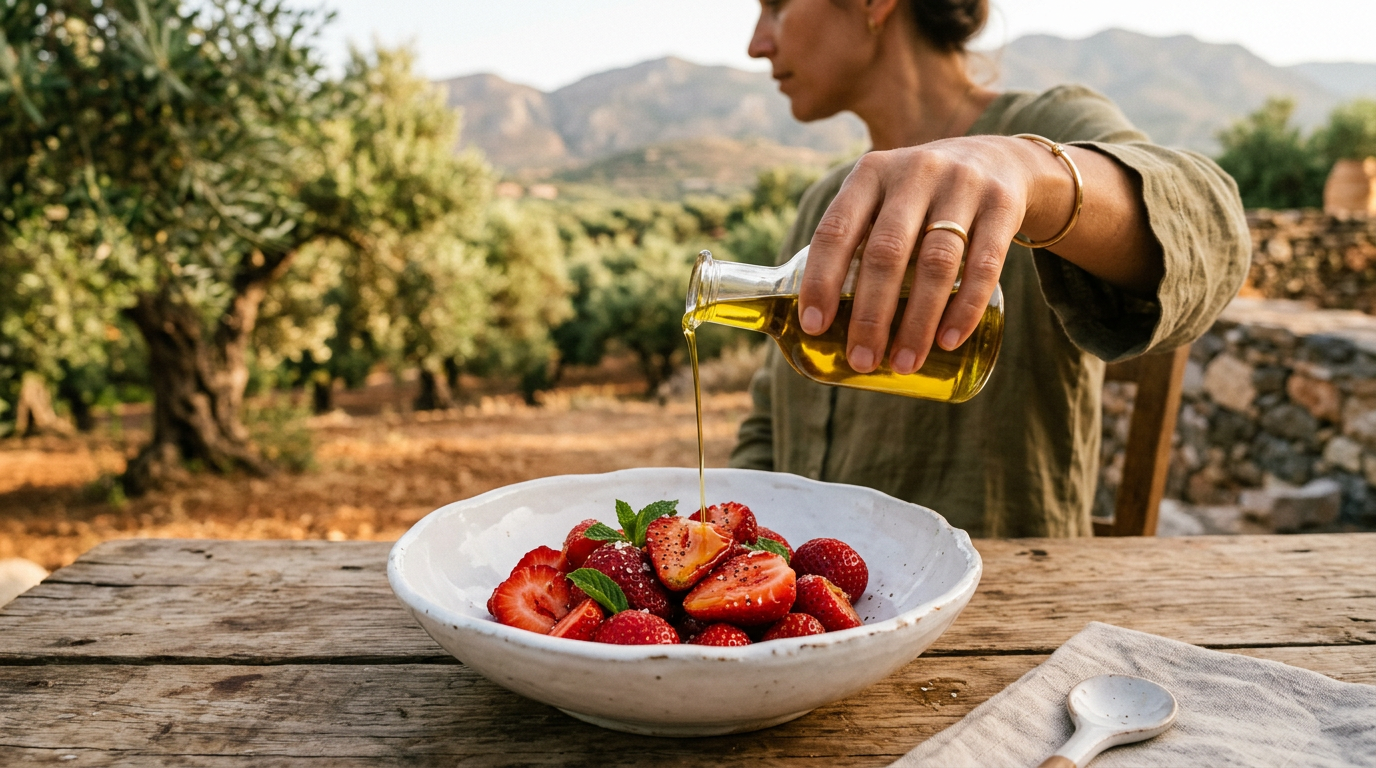
- Marinate: Drizzle the olive oil over the strawberries. Gently toss the bowl so that all the pieces are coated with a thin, silky film. You don't want to drown them, just coat them.
- Season: Generously grind black pepper over them. The amount depends on your personal preference for heat. Be a bit more reserved at first and add more if needed.
- Let it rest (optional, but recommended): Let the marinated strawberries sit at room temperature for 5–10 minutes. During this time, the flavors will meld, and the strawberries will begin to release some juice, which combines with the oil and pepper to form a delicious "vinaigrette."
- Serve: Serve immediately. Either on its own, or with other accompaniments as described below.
Variations & Refinements
This basic recipe is a canvas for your creativity. Here are a few ideas on how you can vary it:
- With herbs: Chopped fresh mint or basil pairs wonderfully and adds an extra herbal freshness.
- With cheese: A few crumbles of mild goat cheese or feta provide a salty, creamy counterpoint.
- With ice cream: A scoop of high-quality vanilla or fior di latte ice cream turns the light dessert into a slightly more decadent but heavenly affair.
- With balsamic: A few drops of aged, thick Aceto Balsamico di Modena add a sweet and sour component.
The Sensory Experience: What Are You Actually Tasting?
Imagine you're a sommelier, but for this dessert instead of wine. Take a spoonful and close your eyes. What happens? First, the aroma reaches you: a cloud of intense, sun-warmed strawberry sweetness, punctuated by the green, almost sharp notes of the olive oil. If you smell closely, you might even notice the fine, floral scent of the pepper.
Then, the first bite. Your tongue meets the silky texture of the oil enveloping the juicy, slightly firm strawberry. The initial taste impression is the pure, unadulterated sweetness of the fruit. But immediately after, the olive oil makes its presence known. Its fruity aromas, reminiscent of green almonds or artichokes, dance with the strawberry. It's not a competition, but a duet. And just when you think you've understood the dish, the pepper arrives. It tingles slightly on the tongue and ignites a gentle warmth in your throat, which prolongs the sweet aftertaste of the strawberry and gives it an exciting, spicy depth. The slight bitterness of the Koroneiki oil cuts through the sweetness, providing a clean, refreshing finish that makes you want another spoonful. It is this sequence—sweet, fruity, oily, sharp, bitter—that makes the experience so incredibly complex and satisfying.
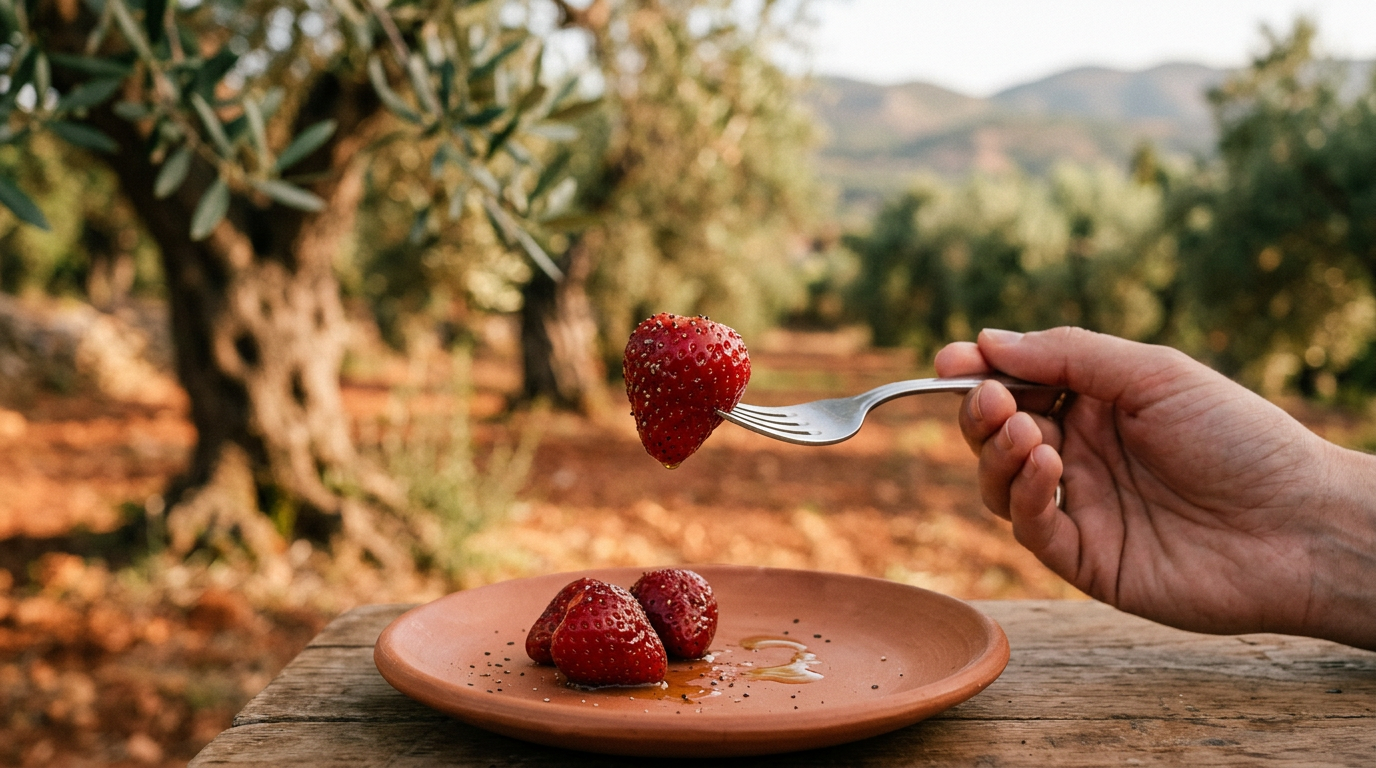
It's a sensory workout. You learn to taste the individual components of a good olive oil and how they interact with other foods. Suddenly, olive oil is no longer just "olive oil," but a complex natural product with an origin and character. Once you've experienced it this way, you'll never want to use a generic oil again. Instead, you'll start actively seeking out oils that complement your dishes. Perhaps this is the beginning of your journey as an olive oil connoisseur and the first step to becoming a member of the Harvest Club, where we reserve the most exclusive and aromatic batches for our most discerning members.
More Than Just a Dessert: The Story Behind the Combination
Although the combination might sound new and daring to us in Northern Europe, it has deep roots in Mediterranean food culture. Especially in Italy, the combination of fruit, vinegar, and pepper (Fragole con Aceto e Pepe) is a classic. The logical evolution in oil-rich regions was to replace the vinegar with a first-class olive oil. In places like Crete, where olive oil has been the central food and seasoning for millennia—used not only for cooking but also as a remedy, for body care, and as a flavor enhancer—there are no rigid boundaries between sweet and savory.
Using olive oil in desserts is a matter of course there. A famous example is the traditional lemon olive oil cake, which becomes incredibly moist from the oil. The combination with strawberries is the most purist form of this philosophy. It celebrates the ingredients rather than masking them.
I remember a warm May evening in Sivas, our village in the heart of the Messara Plain. We were sitting with the Drakakis family after dinner. I had bought fantastic strawberries at the market in Mires and wanted to surprise the family with "my" dessert. When I arrived with the bowl of strawberries, the olive oil, and the pepper mill, I was met with skeptical looks. Father Yannis, a man who has cultivated olive trees his entire life, raised an eyebrow. "Oil... on strawberries?" he asked in disbelief. "Just try it," I said. Hesitantly, he took a spoonful, brought it to his mouth—and paused. His face relaxed, a smile flickered across it. "Not bad at all," he muttered in Greek and immediately took a second spoonful. That evening, we not only shared a dessert but also built a small culinary bridge between tradition and modern curiosity.
💡 Tip: If you have guests, prepare the components separately and celebrate the dressing of the dessert right at the table. Tell the story of the ingredients. This turns a simple dessert into an interactive experience and a conversation starter. This is how good food becomes what it should be: an act of community and enjoyment.
Your Olive Oil for This and Other Adventures
Now that you know what matters, you might better understand why we speak so passionately about our olive oil. It is the result of hard work, respect for nature, and the knowledge of generations. An oil like ours is not just an ingredient; it is the liquid expression of its origin—the barren soils, the intense sun, and the salty breeze of the Messara Plain.
This strawberry dessert is the perfect introduction to the world of finishing oils. You taste the difference directly and purely. And once you've acquired the taste, the possibilities are endless. The same oil that elevates your strawberries will transform a simple tomato soup into a poem, give grilled fish the final touch, or even, yes really, be a sensation drizzled over vanilla ice cream. It's about seeing cooking as a play of flavors.
If you share this commitment to quality, then Olivora is more than just a shop for you. We offer you the chance to become part of the story. With an olive tree adoption, you not only secure the oil from your own tree annually but also support sustainable, traditional agriculture in Crete. Imagine serving this dessert and saying, "By the way, the olive oil comes from my own tree." That's more than luxury; it's a connection. For all who seek the best of the best, there is our exclusive Harvest Club. Here, members get access to limited special bottlings and the best batches of the harvest.
Whether you order your first premium oil from our Cretan olive oil shop or become an olive tree sponsor right away—the step towards better taste begins with the decision for quality. And this simple strawberry dessert is the most delicious first step you can take.
Frequently Asked Questions
Can I use any olive oil? No, the quality is absolutely crucial for this recipe. You should definitely use a fruity, slightly peppery extra virgin olive oil like our Koroneiki oil. A mild, rancid, or overly bitter oil would overwhelm the delicate flavors of the strawberries and ruin the dessert.
Which pepper works best? Freshly ground black pepper is best, as its floral-spicy aromas harmonize ideally with the sweetness of the fruit. Tellicherry pepper is an excellent choice. For an experimental touch, you could also try long pepper or pink peppercorns, which bring a fruitier heat.
Can I prepare the dessert in advance? It tastes best when freshly prepared. While you can wash and cut the strawberries ahead of time, you should only add the olive oil and pepper a few minutes before serving. Otherwise, the strawberries will release too much water and become mushy.
Does this combination also work with other fruits? Yes, absolutely! The culinary principle also works wonderfully with other sweet fruits. In the summer, try it with ripe peaches, nectarines, apricots, or figs. Even ripe, sweet tomatoes—botanically fruits—are an exciting variation, often with a hint of basil.
Isn't olive oil in a dessert unhealthy? On the contrary. A high-quality extra virgin olive oil is rich in monounsaturated fatty acids and health-promoting polyphenols. As part of a dessert, it's a far smarter choice than heavy cream sauces or sugary syrups and fits perfectly into a conscious, Mediterranean diet.
Why is good olive oil more expensive? The price reflects the enormous effort: the careful hand-harvesting to protect the fruit, the early harvest for maximum quality (which reduces yield), the rapid processing within a few hours, and the expertise. Similar to a great wine, you pay for the craftsmanship, the unique origin, and a complex flavor profile.
Can I make the dessert without pepper? You could, but you would miss the crucial point. The pepper not only provides heat, it acts as a flavor catalyst that bundles and enhances the sweetness of the strawberries and the fruitiness of the oil. Our advice: be brave and try it—you'll be surprised.
<!-- FAQ_SCHEMA:[{"answer":"No, quality is absolutely crucial. You should use a fruity, peppery extra virgin olive oil like our Koroneiki oil. A rancid or overly bitter oil would ruin the dessert.","question":"Can I use any olive oil?"},{"answer":"Freshly ground black pepper is best, as its floral-spicy aromas harmonize ideally with the sweetness of the fruit. Tellicherry pepper is an excellent choice. For an experimental note, you could also try pink peppercorns.","question":"Which pepper works best?"},{"answer":"It tastes best when freshly prepared. You can wash and cut the strawberries in advance, but only add the oil and pepper just before serving to prevent the berries from getting mushy.","question":"Can I prepare the dessert in advance?"},{"answer":"Yes, absolutely! The principle also works wonderfully with ripe peaches, nectarines, figs, or even sweet tomatoes. The basic idea remains the same: sweet fruit meets peppery oil and a touch of heat.","question":"Does this combination also work with other fruits?"},{"answer":"On the contrary. High-quality extra virgin olive oil is rich in healthy unsaturated fatty acids and polyphenols. It's a much better choice than cream- or sugar-heavy dessert sauces and supports a healthy diet.","question":"Isn't olive oil in a dessert unhealthy?"},{"answer":"The price reflects the labor-intensive hand-harvesting, the early harvest for maximum quality (which reduces yield), and the rapid processing. Like with wine, you pay for craftsmanship, origin, and a complex flavor profile.","question":"Why is good olive oil more expensive?"},{"answer":"You could, but you would miss the crucial point. The pepper not only provides heat, it acts as a flavor catalyst that bundles and enhances the sweetness and fruitiness. Be brave, you'll be surprised.","question":"Can I make the dessert without pepper?"}] -->